HELM
The Helm Blog
Insights on nervous system regulation, mental clarity, and the science of optimal performance.
HELM
HELM
HELM
HELM
HELM
HELM
Insights on nervous system regulation, mental clarity, and the science of optimal performance.
Helm is the #1 app to optimize your mind, breathe better, and master your focus. Combine science-backed breathwork and meditation into your daily protocol to build resilience.
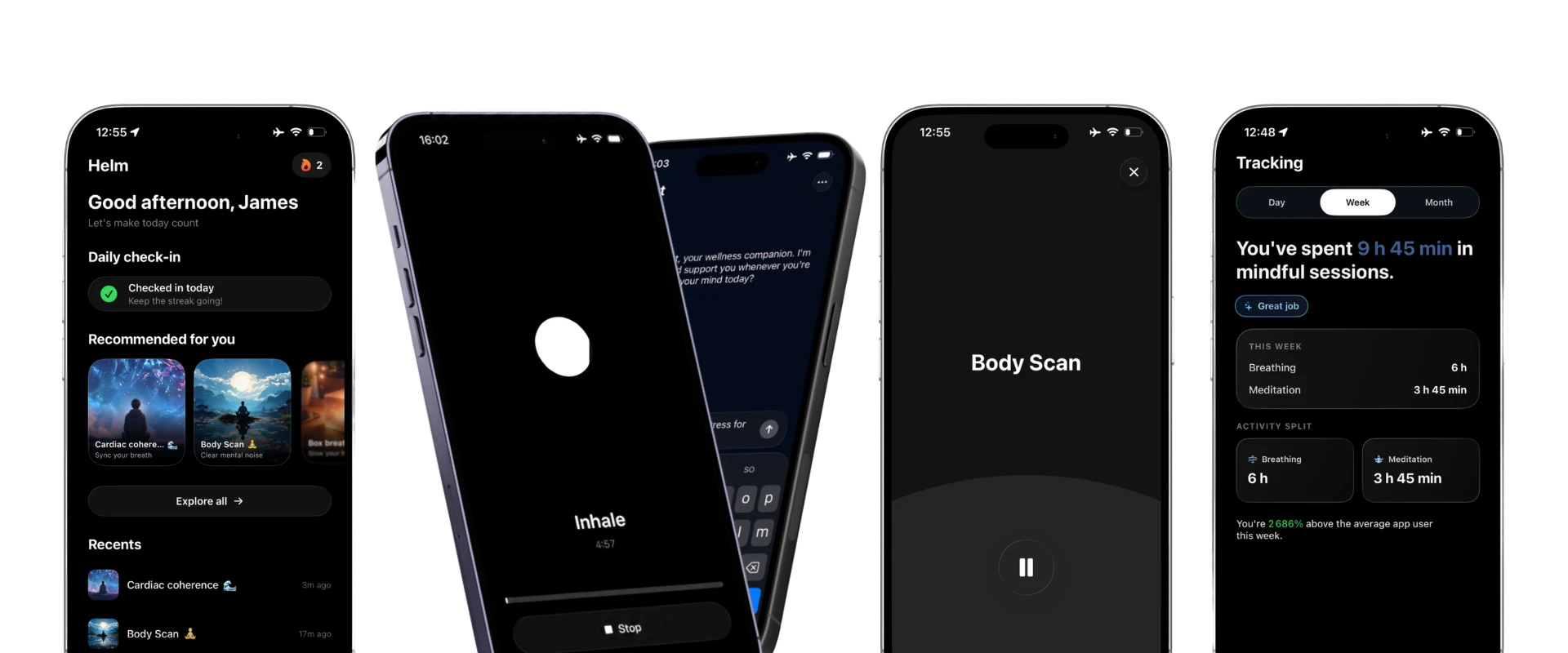
If you're searching for headspace vs calm alternative for men, the best option is usually not another giant meditation library. For many men, a better fit is a body-first, low-friction tool that helps quickly during stress, improves focus without a lot of setup, and feels useful even on busy days. In other words, the strongest alternative is often something built around short guided breathing, nervous system regulation, and clear structure.
That does not mean men need a completely different kind of care. It means many respond better to tools that feel concrete, efficient, and easy to use when they are already tense, distracted, or mentally tired. Research from the American Psychological Association and the National Center for Complementary and Integrative Health supports mindfulness and meditation, but effectiveness in real life also depends on whether you will actually come back to the practice.

The biggest problem is rarely the method itself. It is usually format mismatch. A lot of men try meditation when stress is already high, attention is scattered, and patience is low. In that state, long intros, abstract language, or endless content menus can feel like more cognitive work, not less.
There is also a difference between wanting to feel better and wanting to sit quietly for ten minutes. When someone is wired, restless, or frustrated, a state-change tool often lands better than a reflective practice. Slow breathing can create that shift because it gives the body a clear job to do. According to Harvard Health, breath control can help quiet the stress response in a direct, physiological way.
Another issue is adherence. Men who like measurable progress often stay more consistent when an app feels purposeful: short sessions, clear outcomes, and guidance that works during work stress, pre-sleep tension, or post-gym overstimulation. If the app only works when you already feel calm, it is not solving the real problem.
A better alternative for many men is less content, more utility. The core experience should help you regulate your body first, then your thoughts. That often means guided breathing, somatic cues, short resets, and minimal decision fatigue.
The app should also meet you in different states. If you are stressed, you need something that lowers activation. If you are foggy, you need a clean way to lift attention without caffeine. If you are tired at night, you need a softer downshift. One-size-fits-all meditation libraries often blur those use cases together, while better tools separate them clearly.
This is where breath-led practices stand out. Slow breathing has growing support in the research, including a review in Frontiers in Human Neuroscience showing that paced breathing can influence emotional regulation, autonomic function, and attention. If you want the physiology behind that, this guide on the science behind breathing exercises gives a clear overview without the fluff.
When men say they want a better mental wellness app, they often mean they want less friction. The best alternatives tend to win on usability, not sheer quantity. A smaller set of effective tools usually beats hundreds of tracks you never open.
Look for these features first:
A good app should also feel grounded rather than overly performative. Many men prefer guidance that is plainspoken, body-aware, and not heavily spiritual unless they actively want that style. A JAMA Internal Medicine review found mindfulness programs can improve anxiety, depression, and pain, but the best protocol is still the one you will actually use three or four times a week.
Finally, pay attention to whether the tool helps you transition between roles. A useful app should support stress regulation before a hard conversation, focus recovery after context switching, and nervous system downshifting when the day is done. That is what makes it practical, not just aspirational.
If you are a busy professional, the best fit is usually a brief, guided app with structured breathing resets and short focus sessions. You do not need a 30-minute philosophy lesson between meetings. You need something that works in a parked car, on a lunch break, or before opening your inbox.
If you are skeptical about meditation, start with body-based sessions instead of silent awareness practices. Many men who say meditation does not work for them really mean they have never been shown a concrete entry point. Breathing, grounding, and simple sensory attention are often easier first steps than trying to empty your mind.
If you are performance-oriented, choose an app that helps with both activation and recovery. The nervous system is not supposed to stay in one gear all day. You may want energizing protocols in the morning and slower exhale-led practices in the evening. If your breathing tends to stay high in the chest, start with diaphragmatic breathing vs chest breathing so the basics feel more natural.
If you are an overthinker, avoid apps with too much choice. A simple daily path often beats open-ended browsing. The right tool should reduce internal debate, not add another decision loop.
You do not need a perfect app. You need one that earns repeat use. Run a seven-day trial and judge it by behavior, not hype.
Use this quick filter:
If the answer is no to most of those, move on. A good alternative should feel like a tool you reach for, not homework you avoid. Men often do better with simplicity, repetition, and clear results than with endless variety.
The best alternative is not the one with the biggest name or content library. It is the one that matches how you actually regulate stress, recover focus, and build consistency. For many men, that means a practical, body-first app centered on guided breathing, short resets, and specific use cases instead of passive browsing. Choose something that works when you are tense, time-poor, and mentally overloaded, because that is when support matters most. If you want a simple place to start, try Helm, an iOS mental wellness app designed to manage stress and improve focus through guided breathing resets.
The best type is usually a short-session, guided app focused on breathing and regulation. Men with packed schedules tend to stick with tools that work in 2 to 5 minutes and require very little setup.
Sometimes, yes. Breathing-based apps can feel more immediate because they change your physical state first, which often makes stress easier to manage than starting with thoughts alone.
Yes, that can happen. Start with guided breathing, eyes-open practices, or somatic grounding instead of silent meditation, especially if your nervous system already feels activated.
Seven days is usually enough. If you have used it several times under real-life stress and still do not feel relief, focus, or momentum, it is probably not the right fit.
No, not usually. More content can create more decision fatigue, while a smaller app with strong structure and clear outcomes often leads to better consistency.
Join thousands using Helm to manage stress, improve focus, and build lasting healthy habits.