HELM
The Helm Blog
Insights on nervous system regulation, mental clarity, and the science of optimal performance.
HELM
HELM
HELM
HELM
HELM
HELM
Insights on nervous system regulation, mental clarity, and the science of optimal performance.
Helm is the #1 app to optimize your mind, breathe better, and master your focus. Combine science-backed breathwork and meditation into your daily protocol to build resilience.
Mouth taping at night benefits are possible for some people, but they are usually narrower than social media suggests. If you can already breathe comfortably through your nose, gently keeping the lips closed during sleep may lead to less dry mouth, fewer wake-ups from mouth breathing, and sometimes less snoring linked to an open mouth. It is not a cure for poor sleep, and it is not appropriate if you have nasal blockage, suspected sleep apnea, or any condition that makes breathing feel restricted.
The useful question is not whether mouth taping is good or bad in general. It is whether mouth breathing is actually part of your sleep problem. For some people, it is. For others, the real issue is congestion, stress, reflux, alcohol, insomnia, or untreated sleep apnea. A better approach is to understand what mouth taping may help, what it cannot fix, and how to test it cautiously if you decide to try it.

The strongest case for mouth taping is simple: it can encourage nasal breathing during sleep, and nasal breathing has real advantages. Your nose helps warm, filter, and humidify incoming air, while habitual mouth breathing is more often linked with dry mouth, irritated throat, and restless sleep feelings, as noted by Cleveland Clinic. For people who wake up with a cotton-dry mouth or a scratchy throat, keeping the mouth closed can sometimes reduce those symptoms.
There may also be a smaller, indirect benefit for snoring caused by mouth opening. If your jaw drops open at night, soft tissues can vibrate more easily and airflow may feel less stable. In that situation, a closed-mouth setup may help keep the tongue and jaw in a better resting position. That does not mean it will stop all snoring, but it can be useful when the problem is mostly open-mouth sleep rather than a deeper airway issue.
Some claims about mouth taping go much too far. The current evidence base is limited and early, not strong enough to treat mouth taping like a universal sleep upgrade. A small preliminary study published in PubMed Central found potential improvement in some people with mild sleep apnea who were habitual mouth breathers, but that is very different from proving broad benefits for everyone. One small study is not the same as a standard recommendation.
It is also important to be clear that mouth taping is not a treatment for sleep apnea. If you snore loudly, gasp, choke, stop breathing, wake with headaches, or feel exhausted despite enough time in bed, you need proper evaluation. Both the National Heart, Lung, and Blood Institute and Mayo Clinic describe obstructive sleep apnea as a condition that deserves medical attention, not a home shortcut.
A lot of people who sleep with their mouth open also have daytime breathing mechanics that make nasal breathing harder than it needs to be. If your shoulders lift, your chest stays tight, and your breathing feels shallow, the better first step may be learning the difference between diaphragmatic breathing and chest breathing. In other words, tape can support a pattern, but it does not create a healthy pattern by itself.
Mouth taping is not a beginner-friendly experiment for everyone. You should skip it, or at least speak with a clinician first, if you have any reason to doubt easy nasal airflow. The biggest mistake is forcing the mouth closed when the nose is not reliably open.
There is also a comfort factor people underestimate. Even when the nose is clear, some people feel hyper-aware of their breathing once tape is added, and that can backfire by making sleep feel effortful. If something increases vigilance instead of calm, it is probably the wrong intervention for your system.
If you want to experiment, start by improving the conditions that make nasal breathing easier without tape. That may mean saline rinsing, managing allergies, adjusting bedroom humidity, and reducing late-night alcohol. You are looking for a simple sign: can you lie quietly for several minutes with lips closed and breathe easily through the nose without strain?
A cautious trial looks like this:
The most useful outcome is not perfection. It is information. If mouth taping reduces dry mouth and mild open-mouth snoring, that is meaningful. If it creates discomfort, fragmented sleep, or worry, that is meaningful too, and it tells you to look elsewhere.
Sometimes open-mouth sleep is a symptom, not the root cause. If you are wired at bedtime, waking at 3 a.m., dealing with stress, reflux, a noisy room, or an inconsistent sleep schedule, mouth taping may do very little. In that case, it helps to step back and look at the broader picture, including real reasons you feel tired but still cannot sleep. Better sleep often comes from solving the right problem, not adding another sleep hack.
It is also the wrong target if you need stronger nasal support first. Chronic congestion, a deviated septum, enlarged turbinates, or untreated allergies can make mouth breathing a compensation, not a bad habit. When the nose works well, mouth taping may be a gentle nudge. When the nose does not work well, it can become a frustrating mask over the real issue.
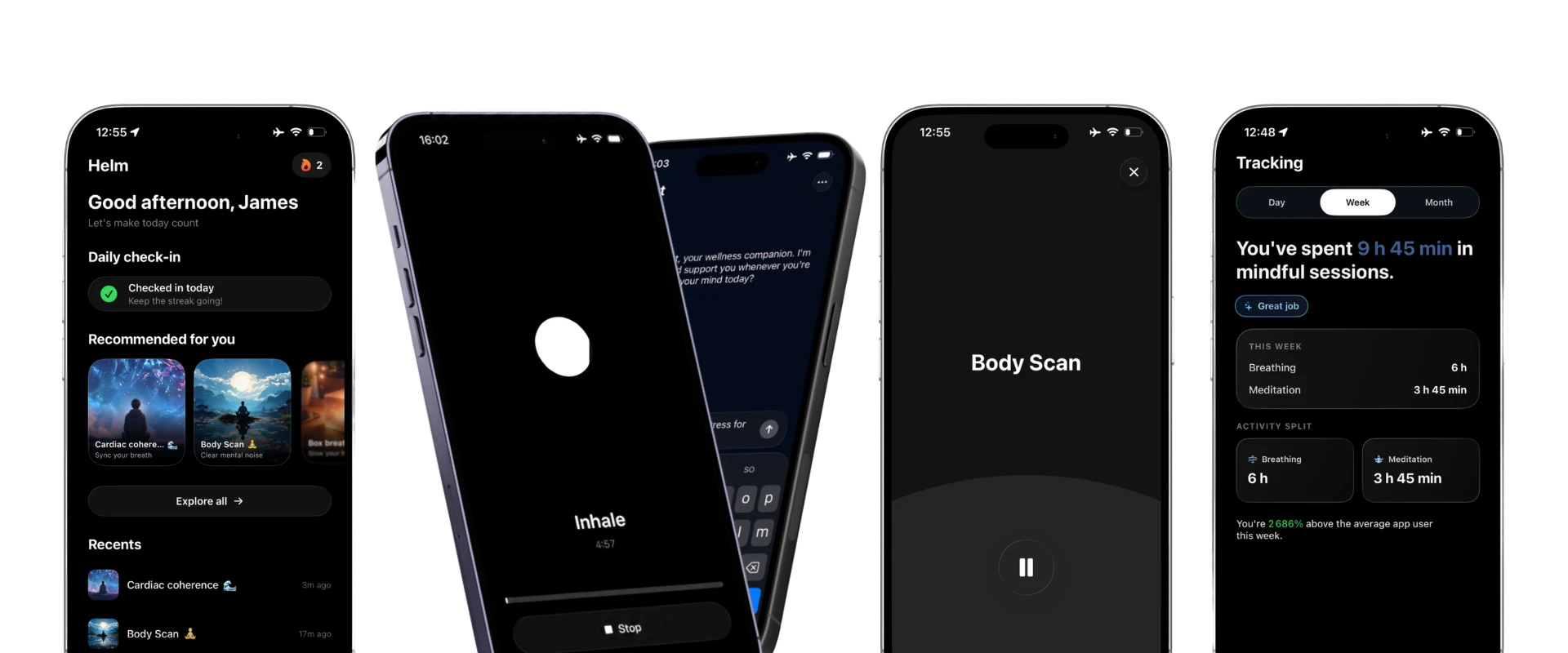
The real upside of mouth taping is modest but potentially useful: less dry mouth, more consistent nasal breathing, and sometimes less snoring tied to sleeping with the mouth open. The real downside is that people often use it on the wrong problem. If your nose is blocked, your sleep is fragmented, or your breathing is already a concern, mouth taping can be uncomfortable at best and inappropriate at worst. Think of it as a narrow tool, not a universal upgrade. If you try it, do so gently, watch how your body responds, and stop if anything feels effortful or unsafe. If you want a gentler way to support bedtime calm and breathing awareness, try Helm, an iOS mental wellness app designed to manage stress and improve focus through guided breathing resets.
No. Mouth taping is not a good idea with nasal blockage because your body may be using mouth breathing to compensate for poor airflow.
No. It may reduce snoring caused by sleeping with your mouth open, but it will not fix every kind of snoring, especially if the issue is deeper in the airway.
No, not as a treatment. Suspected sleep apnea needs medical evaluation, especially if you gasp, choke, snore loudly, or feel very tired during the day.
A few nights is usually enough to notice basic tolerance. If comfort, airflow, or sleep quality gets worse right away, that is a clear sign it is not the right fit.
Yes, that can happen. Stress can shift breathing upward and faster, which makes open-mouth breathing more likely, especially at bedtime or during light sleep.
Join thousands using Helm to manage stress, improve focus, and build lasting healthy habits.