HELM
The Helm Blog
Insights on nervous system regulation, mental clarity, and the science of optimal performance.
HELM
HELM
HELM
HELM
HELM
HELM
Insights on nervous system regulation, mental clarity, and the science of optimal performance.
Helm is the #1 app to optimize your mind, breathe better, and master your focus. Combine science-backed breathwork and meditation into your daily protocol to build resilience.
The benefits of daily mood tracking include better self-awareness, earlier detection of stress patterns, smarter coping choices, and clearer conversations with a therapist or doctor. When you track mood every day, you stop guessing how you have been feeling and start seeing what actually affects you. Over time, a simple record can reveal links between sleep, stress, routines, relationships, and emotional shifts that are easy to miss in the moment.
Daily mood tracking is not about judging yourself or chasing a perfect streak. It is a self-observation tool, not a performance test. For many people, the biggest payoff is that emotions start to feel less random. That sense of clarity can reduce helplessness and make it easier to respond early, before a hard day turns into a hard week.

One reason mood tracking helps is that memory is not neutral. When you are anxious, overwhelmed, or low, your brain tends to remember recent pain more vividly than the many ordinary moments around it. A daily record creates a more balanced picture. Instead of saying, "I have felt awful all month," you may notice that your mood drops mainly after poor sleep, conflict, or skipped meals.
Mood tracking also supports pattern recognition, which is one of the foundations of behavior change. Guidance on coping with stress and building healthier routines consistently points back to noticing triggers, habits, and protective factors. Likewise, information on how sleep loss affects mood and functioning helps explain why a daily log often shows the same theme: your emotional state is shaped by your body and environment, not just by mindset.
The first major benefit is stronger emotional self-awareness. Many people can say they feel "off" but cannot tell whether that means sad, flat, tense, irritated, lonely, or overstimulated. Mood tracking builds a more precise emotional vocabulary. That matters because the more accurately you name an internal state, the easier it becomes to choose the right response.
The second benefit is earlier intervention. If your log shows that racing thoughts usually start after back-to-back meetings or late-night scrolling, you can act sooner. Instead of waiting until you are overloaded, you can insert a short walk, firmer boundaries, or a calming practice. If rumination is a repeating theme, these breathing exercises for overthinkers can pair well with your tracking habit.
A third benefit is that tracking creates better conversations with professionals and loved ones. It is much easier to explain what has been happening when you can say, "My mood dips three days a week after poor sleep," or, "My anxiety spikes before social plans, then settles once I arrive." That kind of detail is more useful than a vague summary and can support more targeted care. General guidance on depression symptoms and patterns and anxiety symptoms and triggers also shows why context matters so much.
Finally, daily mood tracking can increase self-compassion. Many people discover they are not inconsistent or lazy, they are reacting to understandable stressors. Seeing the same triggers repeat on paper often softens self-blame. Instead of asking, "What is wrong with me?" you start asking, "What keeps pushing my system out of balance?" That shift is small, but it is powerful.
A good mood log is simple enough to keep doing and detailed enough to reveal patterns. You do not need long journal entries. In most cases, five data points are enough:
This approach gives you actionable information, not just emotional snapshots. Over a few weeks, you may notice that your best days share certain anchors: enough sleep, a morning walk, less caffeine, more sunlight, or a protected lunch break. You may also spot hidden patterns, like feeling low not after stressful days, but after highly social ones, which can point to overstimulation rather than sadness.
The best mood tracking habit is brief, consistent, and low pressure. Pick one moment of the day, such as after lunch or before bed, and use the same prompts each time. If the process takes more than two minutes, it becomes easier to skip and more likely to feel like homework.
It also helps to review your notes weekly instead of overanalyzing them daily. Patterns matter more than single entries. One bad day means very little on its own. Three weeks of similar dips after poor sleep, conflict, or isolation means a lot more. That is where the real benefits of daily mood tracking show up.
If you want to turn insight into regulation, pair your log with one tiny reset. After recording your mood, do a 60 to 90 second breathing practice, stretch, or step outside. This creates a bridge between awareness and action. A gentle option is to follow a short practice from this coherent breathing guide for calm and focus.
Mood tracking is not always the right tool, though. If logging makes you more self-critical, more fixated, or more anxious, simplify it or pause. And if you notice persistent low mood, frequent panic, hopelessness, disrupted sleep, or trouble functioning for more than two weeks, self-tracking should not replace support. It can be useful evidence to bring into care, but it is not a substitute for professional help.
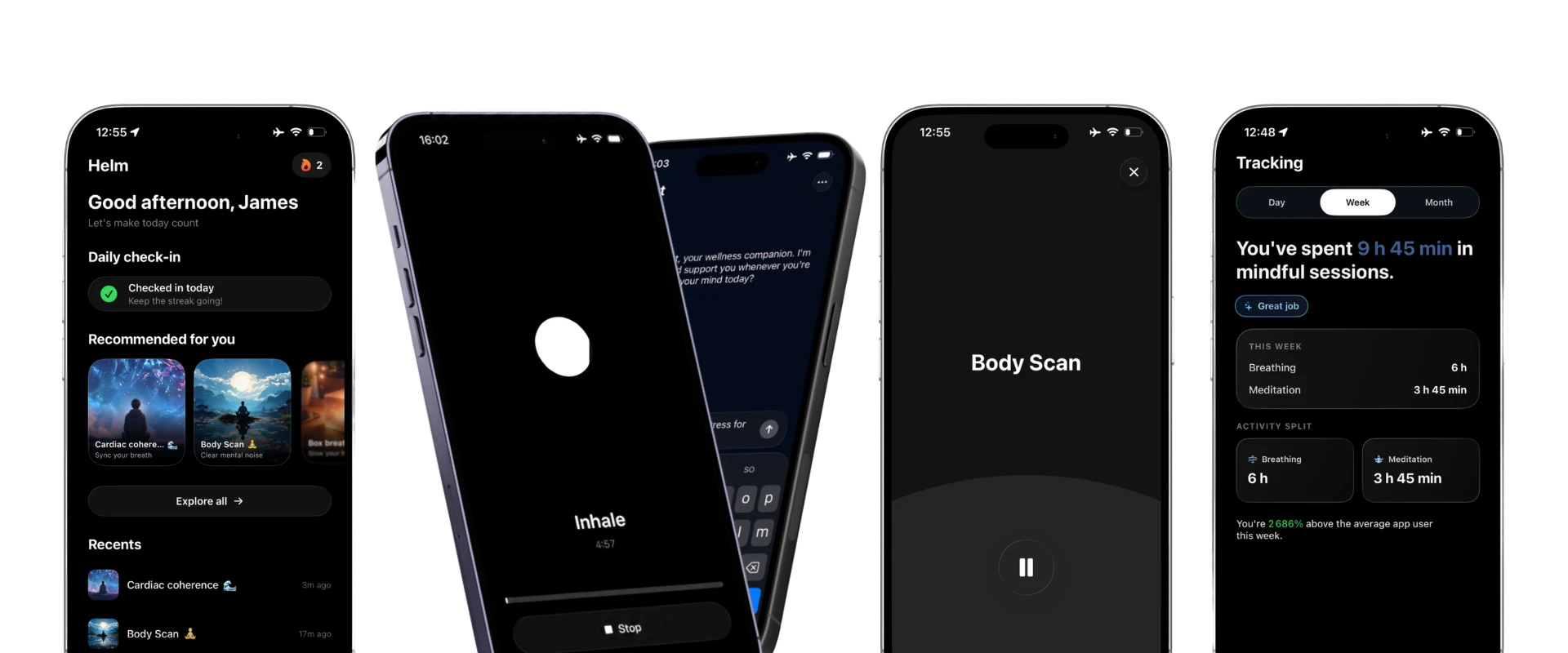
The real value of mood tracking is not that it helps you document emotions. It helps you understand them in context. Over time, that can lead to earlier course corrections, better boundaries, more realistic expectations, and coping choices that actually match what your body and mind need. The habit works best when it stays small, honest, and flexible. You are not trying to produce perfect data. You are trying to notice what nudges you toward steadiness, and what quietly pulls you away from it. If you want extra structure, you can also try Helm, an iOS mental wellness app designed to manage stress and improve focus through guided breathing resets.
Yes, daily mood tracking can help with anxiety because it makes triggers, body cues, and recovery patterns easier to spot. The key is to keep it brief so it supports awareness instead of feeding rumination.
About two to four weeks is enough for many people to notice useful trends. Bigger patterns, like the effect of sleep, hormones, or workload, often become clearer after a month.
Yes, it can for some people. If you find yourself checking entries repeatedly or judging every emotional shift, shorten the process and focus on weekly review instead of constant analysis.
The best time is the time you will actually keep. Many people do well with a quick evening check-in because it captures the whole day, but a midday check can work if nights feel too tiring.
Join thousands using Helm to manage stress, improve focus, and build lasting healthy habits.