HELM
The Helm Blog
Insights on nervous system regulation, mental clarity, and the science of optimal performance.
HELM
HELM
HELM
HELM
HELM
HELM
Insights on nervous system regulation, mental clarity, and the science of optimal performance.
Helm is the #1 app to optimize your mind, breathe better, and master your focus. Combine science-backed breathwork and meditation into your daily protocol to build resilience.
If anxiety hits, your mind often races ahead while your body flips into high alert. Box breathing for anxiety is one of the most practical ways to interrupt that loop because it gives your attention something neutral to follow while nudging your nervous system toward steadier rhythm.
Think of it as training wheels for calm. The equal counts create a predictable pattern, and predictability is soothing to a stressed brain. When you slow breathing down and reduce frantic sighing or gasping, you often reduce symptoms like chest tightness, tingling, and the feeling of being “on edge,” even if the situation itself has not changed.
This is not about “fixing” anxiety with one trick. It is about giving your body a clear signal: right now, you can downshift. Used consistently, it becomes a fast reset button, especially when you pair it with good positioning, gentle effort, and realistic expectations.

When anxiety rises, breathing tends to become fast, shallow, and upper chest driven. That pattern can reinforce the stress response by shifting blood gases and keeping the body in an aroused state. A slower, controlled cadence does the opposite: it supports parasympathetic activity and can improve heart rate variability, a marker often associated with better stress resilience.
Research on slow breathing shows measurable effects on autonomic balance and emotional regulation. If you want the science, this review summarizes how paced breathing influences stress physiology and vagal pathways in plain terms: overview of slow breathing effects on the nervous system. You do not need perfect technique, you need a consistent, comfortable pace.
Box breathing is also cognitively helpful. Counting gives your attention a simple “job,” which can reduce catastrophic scanning and rumination. For a broader primer on how different breath styles affect your stress response, see the science behind breathing exercises. Attention plus rhythm is a powerful combination.
The classic method is four equal sides of a “box”: inhale, hold, exhale, hold. The key is smoothness over force. If you strain, you may trigger more tension, which defeats the purpose.
Repeat for 4 rounds (about 1 to 2 minutes), then reassess. If you feel steadier, continue for up to 5 minutes.
Box breathing is adjustable, and that is often what makes it work for anxious bodies. Start where your body agrees and build from there.
If you have a history of panic attacks, begin seated with feet on the floor and one hand on your lower ribs. Grounding plus breathing is more stabilizing than breathing alone.
Some people feel more anxious when they first try structured breathing. That does not mean it is “not for you.” It usually means the starting settings are too intense or the body is already close to panic.
The most common issue is air hunger, the uncomfortable sense that you cannot get enough air. This can happen if you over-inhale, hold too long, or tense your throat. Fix it by making everything smaller: inhale less, soften the belly, shorten or remove the holds, and extend the exhale gently.
Another issue is dizziness or tingling, which can be related to subtle over-breathing. Keep the breath low and quiet, and do fewer rounds. If symptoms persist, stop and return to normal breathing. A broader view of anxiety symptoms and when to get help is available here: anxiety disorders overview and support options. Breathing is supportive, not a substitute for care.
If you are pregnant, have cardiovascular or respiratory conditions, or have a history of fainting, get clinical guidance before practicing breath holds. When in doubt, remove the holds entirely and practice gentle slow exhalations instead.
Anxiety tends to show up in patterns, before a meeting, at bedtime, during a conflict, after scrolling, or when you are hungry and tired. The fastest way to make box breathing reliable is to attach it to predictable moments.
Try one of these mini routines for seven days:
If you want a dedicated walkthrough with timing options you can follow without thinking, use this companion guide: box breathing exercise: a 4-minute reset for calm and focus. Reducing friction is how habits stick.
Box breathing shines for acute stress, racing thoughts, and pre-event nerves. But it is not always the best match. If you are already feeling breathless, have intense panic sensations, or notice that breath holds escalate fear, choose a method that emphasizes continuous breathing with a longer exhale.
You can also widen the toolkit: pairing paced breathing with a brief body scan, gentle movement, or a calming phrase often works better than any single method. Reviews on breath-based practices suggest that multiple mechanisms are at play, including attention training and autonomic shifts: review of breathing practices and health outcomes. The best technique is the one you will actually use.
Seek professional support if anxiety is frequent, disrupting sleep or work, or tied to panic, trauma, or depression. Skill-building is powerful, and you do not have to do it alone.
Box breathing is simple, but it is not simplistic. By giving your mind a steady count and your body a slower rhythm, you create the conditions for anxiety to ease, even if the trigger is still present. Start small, prioritize comfort, and treat the breath like a dial you turn gradually, not a switch you force.
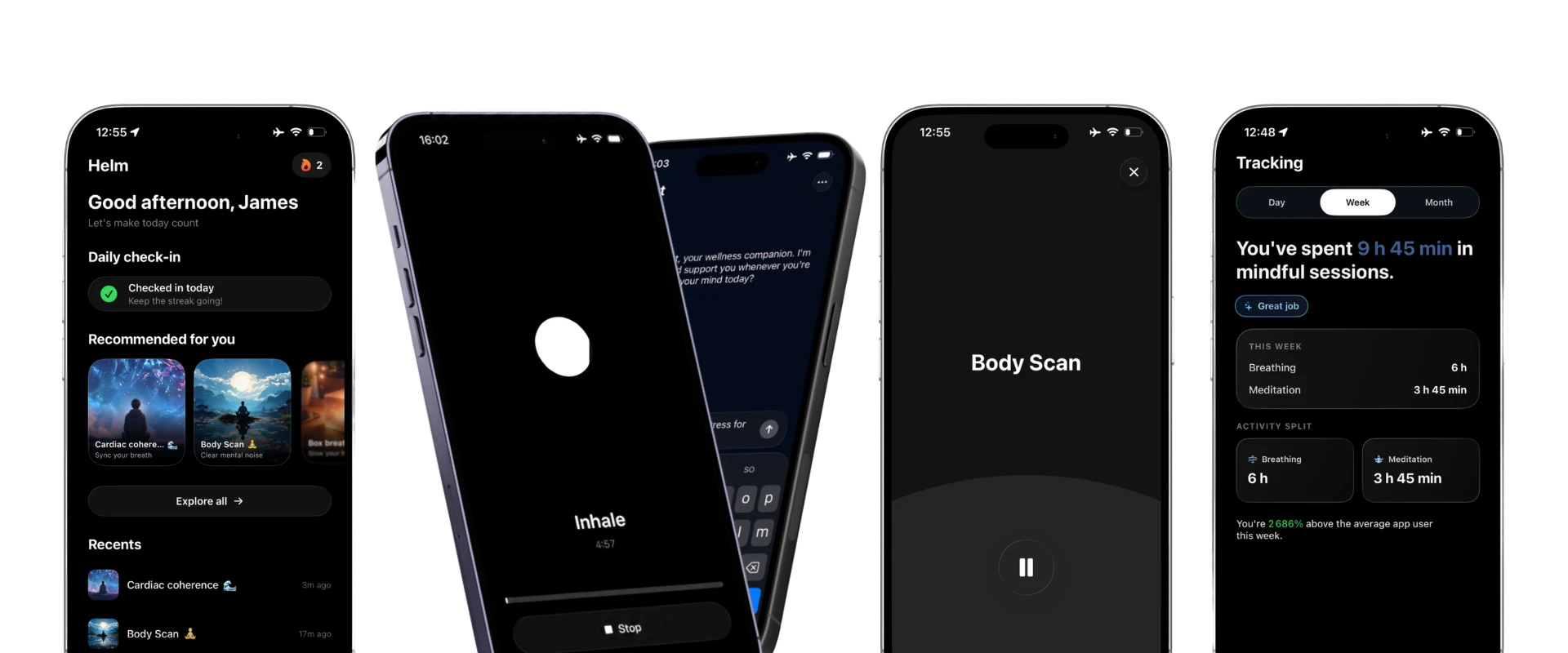
If it feels challenging at first, adjust the holds, reduce the inhale, and focus on a smooth exhale. Practice in calm moments so it is available in hard ones. Over time, you may notice you recover faster, sleep more easily, and feel more choice in stressful situations. If you want guided breathing resets in your pocket, try Helm, an iOS mental wellness app designed to manage stress and improve focus through guided breathing resets.
Aim for 4 to 10 rounds (about 2 to 5 minutes). Stop sooner if you feel lightheaded, and resume normal breathing, the goal is steadier regulation, not endurance.
Often yes, but use short or no holds (for example 4-0-6-0) if holds increase fear. If symptoms escalate or you have medical risks, stop and seek appropriate support.
Try smaller inhales and shorter holds, like 3-1-4-1 or 4-2-4-2. Air hunger usually improves when you reduce effort, keep the breath quiet, and emphasize a relaxed exhale.
It can help by slowing the respiratory rhythm and reducing stress signaling, which may allow heart rate to settle. Results vary, but many people feel a noticeable shift within 60 to 120 seconds.
Nose breathing is usually best for slower, steadier airflow. If your nose is blocked, a gentle mouth exhale can work, avoid big gulps of air and keep the breath soft.
Join thousands using Helm to manage stress, improve focus, and build lasting healthy habits.