HELM
The Helm Blog
Insights on nervous system regulation, mental clarity, and the science of optimal performance.
HELM
HELM
HELM
HELM
HELM
HELM
Insights on nervous system regulation, mental clarity, and the science of optimal performance.
Helm is the #1 app to optimize your mind, breathe better, and master your focus. Combine science-backed breathwork and meditation into your daily protocol to build resilience.
The box breathing exercise is a simple pattern of equal counts that helps you shift out of stress reactivity and back into steadier, more deliberate control. You inhale, hold, exhale, and hold again for the same amount of time, like moving along the four sides of a box. It is small enough to do in a meeting, before a tough conversation, or at bedtime, yet structured enough to interrupt spiraling thoughts.
What makes it useful is not willpower or positive thinking. It is the way breath mechanics and attention work together. The count gives your mind a job, and the slower rhythm gives your nervous system a clearer signal of safety. Below you will learn what is happening in your body, how to do it cleanly, and how to adapt it if holding your breath feels uncomfortable.

At its core, box breathing is a paced breathing technique that nudges your system toward parasympathetic activation, the branch associated with rest, digestion, and recovery. Slowing the breath tends to increase vagal influence on the heart, which can support steadier heart rate variability patterns and a calmer felt sense in the body.
Mechanistically, several things are happening at once:
The goal is not to force relaxation. It is to create conditions where your body can downshift. If you want the deeper research context on why paced breathing works, see the science behind breathing exercises.
For a research overview of slow, controlled breathing and how it relates to autonomic balance and emotion regulation, this open-access evidence review is a solid starting point: evidence review on slow breathing and autonomic balance.
Think “quiet, light, and smooth.” The best box breathing is subtle, not dramatic. Use nose breathing if possible, keep your jaw unclenched, and let the belly and lower ribs expand gently.
Repeat for 4 rounds (about 4 minutes). Keep the counts steady, and aim for no strain on the holds.
The “4” is just a starting point. Your best count is the one you can repeat while staying relaxed in your throat, chest, and face.
For a tight, practical walk-through of this pattern, including timing ideas for stressful moments, you can also read the 4-4-4-4 method for instant calm.
Most people quit box breathing because they accidentally turn it into a performance. The pattern should feel like guiding your system, not wrestling it.
Big inhales can create lightheadedness, especially if you are already anxious. Keep the inhale smaller than you think you need, and prioritize smoothness over volume.
A “hard hold” (clamped throat, lifted shoulders) can raise stress. The hold is meant to be a gentle pause. If you feel your neck tighten, shorten the count or remove holds temporarily.
A strained exhale can feel like pushing. Instead, let the exhale be steady and even, as if you are slowly fogging a mirror without sound.
Fast counting defeats the purpose. Try counting at a pace that feels like a slow walk. If needed, use a finger tap to keep rhythm without racing.
For additional context on controlled breathing approaches used in health settings, including pacing and safety considerations, this overview is helpful: overview of controlled breathing in clinical settings.
Box breathing works best when you treat it as a short state change rather than a cure-all. Use it strategically.
If you notice tunnel vision, jaw tension, or a racing inner monologue, do 2 to 4 rounds. The structure helps interrupt the loop, and the slower rhythm can reduce the urge to overbreathe.
Tip: Pair it with a simple cue, like relaxing the tongue to the roof of the mouth. Small physical signals reinforce safety.
Box breathing can be useful before presentations, difficult emails, or complex problem-solving. The primary effect here is often attention stabilization, not sleepiness. If you get drowsy, your pace may be too slow for the moment. Use 3-3-3-3 instead.
If you are wired at night, box breathing can help, but many people sleep best with longer exhales and no holds. Consider using 4-0-6-0 or 4-0-8-0 at bedtime, then return to classic box breathing during daytime stress.
If you are prone to panic sensations, it can help to understand the role of carbon dioxide and “air hunger.” This research discussion provides useful background: research discussion on carbon dioxide and breathing regulation.
Box breathing is generally safe for healthy adults, but breath holds are not appropriate for everyone. Your rule is simple: no strain, no dizziness, no urgency.
Modify or skip breath holds if you:
If any practice produces tingling, numbness, chest pain, or marked lightheadedness, stop and return to normal breathing. The goal is nervous system regulation, not endurance. When in doubt, ask a qualified clinician for guidance, especially if you have a diagnosed medical condition.
The box breathing exercise is a compact tool for shifting your physiology toward steadier ground. When you keep the breath light, the counts consistent, and the holds gentle, you give your nervous system a clear pattern to follow. Start with just four rounds, then let the benefits compound through repetition: calmer stress responses, cleaner focus, and more space between stimulus and reaction.
If it ever feels hard, that is useful information, not failure. Shorten the counts, remove the holds, or practice at a calmer time of day, then gradually build tolerance. Consistency wins here because your body learns what the rhythm means.
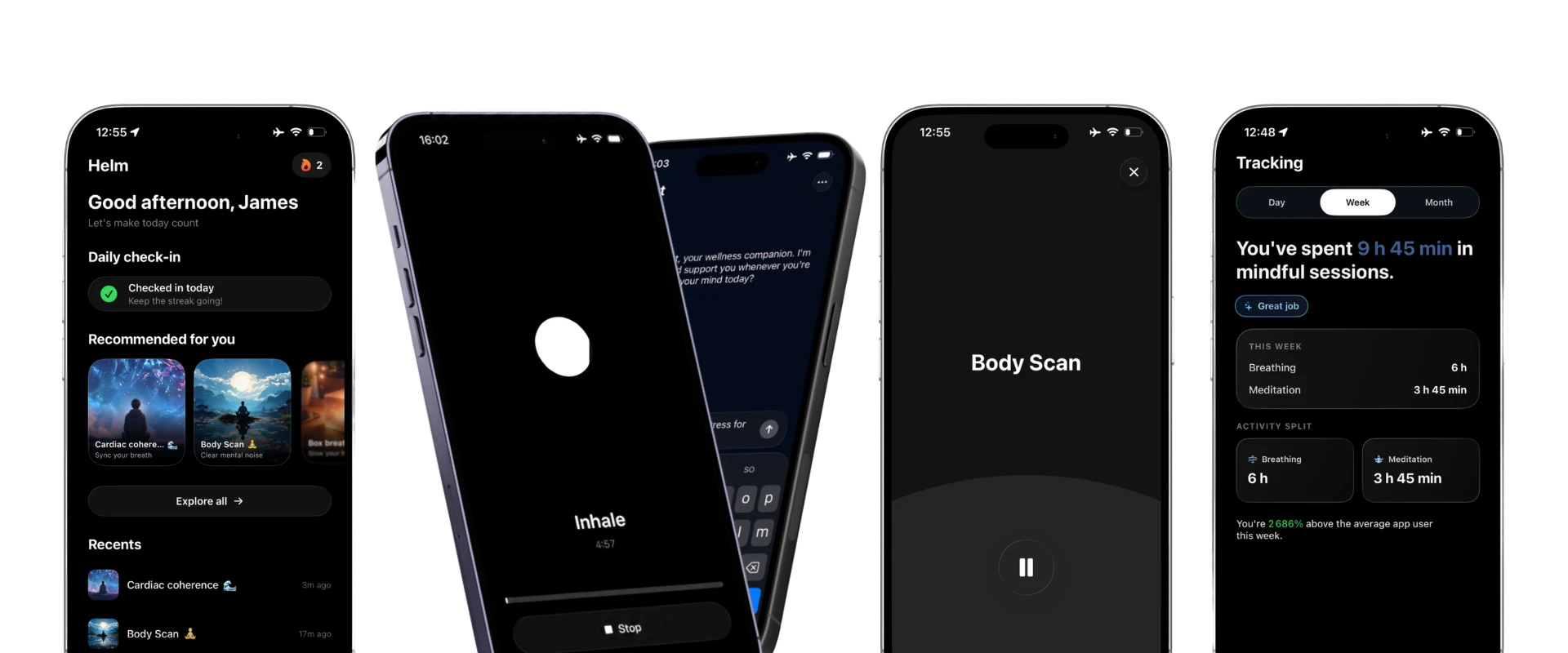
If you want a guided way to practice these resets, try Helm, an iOS mental wellness app designed to manage stress and improve focus through guided breathing resets.
It can help by slowing breathing rate and giving attention a structured task, which often reduces spiraling. If breath holds trigger panic sensations, use 4-0-4-0 and focus on smooth exhales.
Two to four minutes is enough for a noticeable shift. For longer-term nervous system regulation, aim for one short session daily for two weeks, then use it as needed.
Holds can increase carbon dioxide sensation, which some people interpret as air hunger. Reduce the count, soften the hold, or remove holds temporarily while keeping the breathing slow and quiet.
Yes, but if it feels too activating, switch to a longer exhale without holds, like 4-0-6-0. The goal at night is settling, not effortful control.
Start with 3-3-3-3 or 4-4-4-4, whichever feels easy and relaxed. You should be able to keep the rhythm without tension in the face, throat, or shoulders.
Join thousands using Helm to manage stress, improve focus, and build lasting healthy habits.