HELM
The Helm Blog
Insights on nervous system regulation, mental clarity, and the science of optimal performance.
HELM
HELM
HELM
HELM
HELM
HELM
Insights on nervous system regulation, mental clarity, and the science of optimal performance.
Helm is the #1 app to optimize your mind, breathe better, and master your focus. Combine science-backed breathwork and meditation into your daily protocol to build resilience.
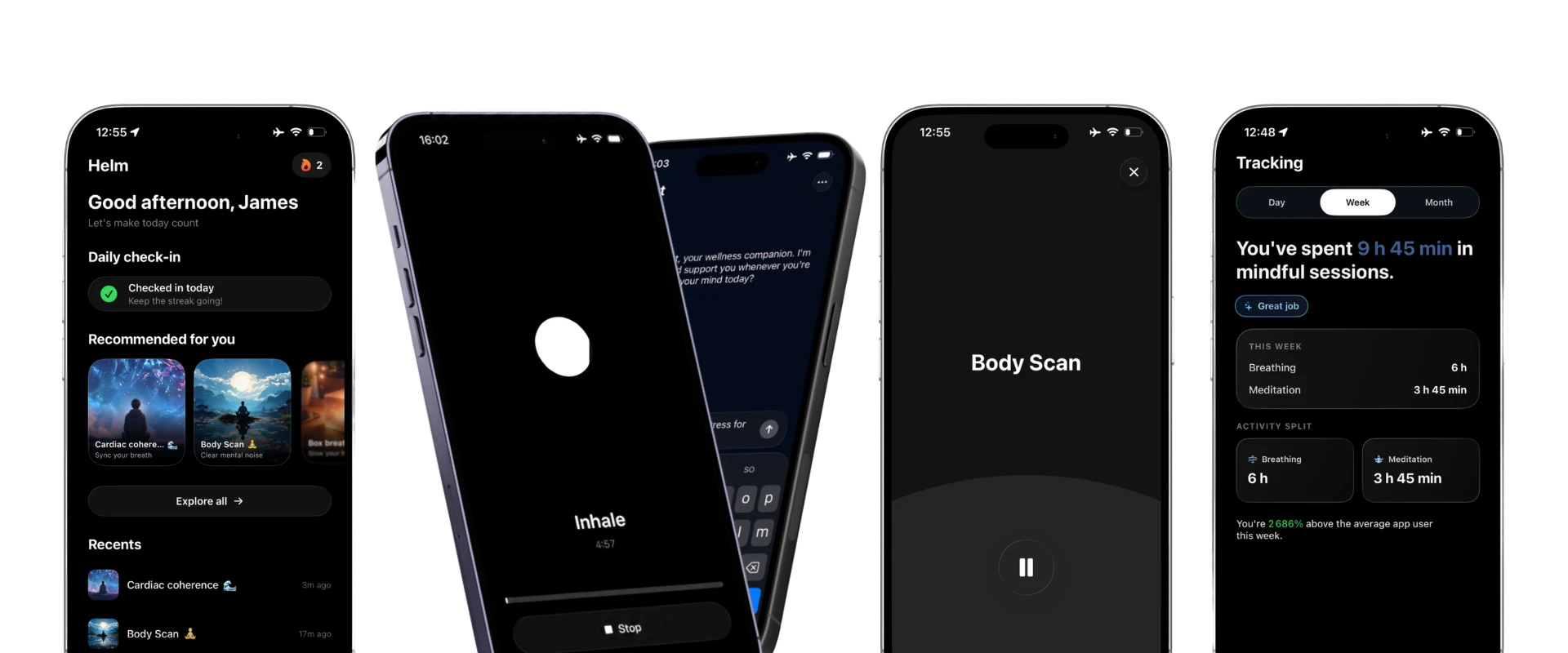
Starting guided meditation for beginners can feel oddly intimidating: you sit down to relax, and suddenly your mind gets louder. That is normal. Meditation is not about blanking your thoughts, it is about training attention and recovering your baseline when it wanders. Guided practice helps because it gives your mind a job: listen, notice, return.
If you are new, the most useful shift is to aim for consistency, not peak serenity. Ten minutes practiced regularly tends to change your relationship with stress more than one long session that leaves you frustrated. Research summaries from reputable health organizations describe benefits like improved stress symptoms and emotional regulation when mindfulness is practiced consistently, even in short sessions (NCCIH overview, APA on mindfulness and meditation).
Below you will find a simple routine, how to choose guidance that fits you, and what to do when the session does not feel “good.”

Guided meditation means you follow spoken cues that direct your attention, usually to the breath, body sensations, sounds, or a simple phrase. For beginners, this reduces decision fatigue. Instead of constantly asking “What do I do now?” you practice one core skill: notice and return.
The guidance also helps you reinterpret common experiences. A wandering mind becomes part of the exercise, not a failure. A surge of restlessness becomes a signal to soften the body, not to quit. Over time, this can support stress reduction and steadier mood. A large review of meditation programs found small to moderate improvements for anxiety and depression-related symptoms in some groups (JAMA review on meditation programs).
If you are especially stress-reactive, it may help to pair meditation with basic nervous system literacy. The way your body responds to pressure matters as much as the thoughts in your head. You can explore practical options in how to calm nervous system when stress spikes, then return here to build a daily practice.
Beginners often quit because the first track they try is mismatched to their needs. Choose based on what you want to train today, not what sounds impressive.
This is the classic entry point. You anchor attention on natural breathing and practice coming back gently. It is great for attention training and stress reduction, and it tends to be simple to repeat daily.
If you want the “why” behind breath cues and calming effects, read Science behind breathing exercises: feel calmer in 5 minutes. Understanding the mechanism often improves follow-through because the practice feels more purposeful.
A body scan moves attention through the body from head to toe. It is helpful if you live in your head or struggle with sleep because it encourages interoception, the skill of sensing the body. If you carry trauma history, go slowly and skip areas that feel activating.
This style asks you to observe thoughts, emotions, and sounds as they arise. It can be powerful, but it is not always the easiest starting point. If you feel overwhelmed by mental chatter, begin with breath-focused guidance first, then expand.
Sometimes called loving-kindness, this uses phrases like “May I be safe” to cultivate warmth. It is a good fit if self-criticism is your default. It builds self-compassion and emotional flexibility, which can make breath practice easier too.
You can use this script as your “mental track.” Read it once, then practice from memory. The goal is not perfect focus, it is repeated gentle returning.
If you feel anxious during practice, reduce intensity. Keep your eyes open, sit more upright, and focus on sensations of contact, like feet on the floor. These are grounding cues that support nervous system regulation.
Beginners often assume a “bad session” means they are doing it wrong. In reality, difficulty is usually the training stimulus. The key is learning how to adjust without quitting.
Common obstacles and skillful responses:
If you are dealing with persistent anxiety, depression, trauma symptoms, or panic attacks, consider professional support. Meditation can help, but it is not a substitute for care. For an evidence-informed overview of mindfulness benefits and limits, Harvard’s health education resources are a helpful starting point (Harvard on mindfulness benefits).
Consistency is built by reducing friction and making success easy. Treat your practice like brushing your teeth: small, regular, and not dependent on motivation.
Use these principles:
A daily 5 to 10 minutes is enough to build meditation consistency. Longer sessions can come later. The habit matters more than intensity.
Attach practice to something you already do, morning coffee, lunch break, or the moment you sit in your parked car. Cue-based routines become automatic faster.
Instead of tracking “calm,” track completion. Calm varies. Completion is controllable. Over weeks, many people notice improved focus, fewer spirals, and better recovery after stress.
Replace “I should meditate” with “I am practicing returning.” This frames meditation as a skill, not a moral test. That mindset shift supports beginner meditation confidence.
Guided practice works because it gives your attention clear rails: focus, notice, return. With time, this becomes a portable skill you can use in meetings, in conflict, or before sleep. Keep your sessions short, choose one style that fits your current needs, and expect the mind to wander. Each return is the repetition that builds steadiness.
If you want progress, make it easy to start and easy to repeat: same place, same cue, same length for two weeks. After that, you can experiment with body scans, kindness-based phrases, or wider awareness. If you want a structured way to practice, try Helm, a mobile mental wellness app designed to manage stress and improve focus through guided breathing resets.
Often, yes. Guidance reduces uncertainty and teaches the core skill of returning attention. Silent practice can be great later, once you know what to do when the mind drifts.
Start with 5 to 10 minutes daily. Consistency matters more than duration, and short sessions make it easier to build a habit without feeling overwhelmed.
Open your eyes, sit upright, and anchor to contact points like feet on the floor. Shorten the session and choose breath at the nostrils, not deep breathing, to reduce intensity.
You can, especially for body scans, but it increases sleepiness. If you keep nodding off, switch to seated practice or try a time of day when you are more alert.
Some people feel calmer immediately, others notice changes over weeks. Look for practical signals like quicker recovery from stress, fewer reactive choices, and improved focus, not constant calm.
Join thousands using Helm to manage stress, improve focus, and build lasting healthy habits.