HELM
The Helm Blog
Insights on nervous system regulation, mental clarity, and the science of optimal performance.
HELM
HELM
HELM
HELM
HELM
HELM
Insights on nervous system regulation, mental clarity, and the science of optimal performance.
Helm is the #1 app to optimize your mind, breathe better, and master your focus. Combine science-backed breathwork and meditation into your daily protocol to build resilience.
If you're wondering how to improve HRV (Heart Rate Variability), the short answer is this: improve recovery, not just the number. HRV tends to rise when your body can shift smoothly between effort and rest, so the biggest levers are consistent sleep, balanced training, good fueling, less alcohol, and a few minutes of slow breathing most days. Daily swings are normal, which means the goal is a better trend over time, not a perfect reading tomorrow.
Think of HRV as a readiness and resilience signal. A higher score often reflects better recovery and autonomic flexibility, but your own baseline matters more than someone else's score. The most useful approach is simple: protect sleep, stop stacking stress from every direction, and use your data to make smarter decisions instead of pushing harder when your body is already asking for a lighter day.

HRV measures the tiny differences in time between heartbeats. Those differences are influenced by the autonomic nervous system, especially the balance between stress activation and recovery mode. A helpful medical overview of HRV explains why higher variability is often linked to better adaptability, while lower variability can show strain, fatigue, illness, or poor recovery.
That said, context matters. A low HRV after a hard workout, a bad night of sleep, travel, dehydration, or emotional stress does not automatically mean something is wrong. It means your system is responding to load. The real question is whether your numbers rebound when recovery improves. That is why weekly patterns are usually more meaningful than any single morning reading.
The first lever is sleep consistency. Going to bed and waking up at roughly the same time often does more for HRV than chasing perfect sleep gadgets or supplements. Short sleep, fragmented sleep, and irregular timing all reduce recovery quality. These sleep duration recommendations for adults are a useful reminder that quantity matters, but regular timing matters too.
The second lever is training balance. Moderate aerobic exercise is one of the best long-term ways to improve HRV because it strengthens cardiovascular efficiency and recovery capacity. But more is not always better. If every workout leaves you drained, HRV may fall instead of rise. Follow sensible physical activity guidelines, include easy days, and make sure you are eating enough protein, carbohydrates, and total calories to recover from the work you do.
The third lever is slow breathing practice. A few minutes of calm, nasal, diaphragmatic breathing can increase vagal activity and help your body shift out of constant threat mode. A review of slow breathing and heart rate variability suggests that paced breathing can support both stress regulation and HRV. If you want the mechanism in plain English, this explanation of the science behind breathing exercises is a useful next read. Keep it gentle, especially on the exhale, and avoid turning relaxation into another performance test.
If your readings have been flat or trending down, keep it boring for one week. HRV usually responds well to reduced friction, regular rhythms, and less all-or-nothing behavior.
This is the minimum effective dose mindset. You do not need a dramatic protocol. You need a week that gives your nervous system fewer reasons to stay activated. Many people are surprised that HRV improves faster when they stop forcing recovery and start making their days more predictable.
Some of the biggest hidden HRV drains are socially normalized. Under-sleeping during the week and trying to catch up on weekends can keep HRV suppressed. So can under-eating, especially if you train hard and rely on willpower instead of recovery. Mental load counts too. If your body reads your day as nonstop demand, your nervous system does not care whether the stress came from exercise, work, conflict, or poor sleep.
Another common issue is stacked recovery debt. A hard workout, several coffees, a late dinner, two glasses of alcohol, and a short night can all land on the same 24-hour window. Each one might seem manageable alone, but together they often show up in HRV the next morning. If your score drops after a heavy evening, do not panic. Use it as a cue to simplify the next day rather than trying to out-train the signal.
The most useful way to judge improvement is your weekly average, not your best day. Pair HRV with a few notes about sleep, soreness, mood, alcohol, training load, and illness symptoms. Over time, patterns become obvious. You may notice that your best HRV weeks are not the weeks when you worked hardest, but the weeks when your schedule was steady, your training was well matched to your capacity, and your evenings were less stimulating.
Try to think in trend over perfection. A single low reading is information, not failure. If you feel wired and your score is unusually low, that is a good day to downshift with one of these ways to calm your nervous system fast, walk, hydrate, and go to bed earlier. The goal is not to control HRV directly. The goal is to create conditions where your body can recover well enough that HRV rises on its own.
Improving HRV is less about hacking your body and more about supporting recovery capacity every day. The strongest levers are usually unglamorous: stable sleep, sensible exercise, enough food, lower alcohol, and regular moments that tell your nervous system it is safe to power down. Breathing can help, but it works best as part of a bigger recovery pattern, not as a stand-alone fix.
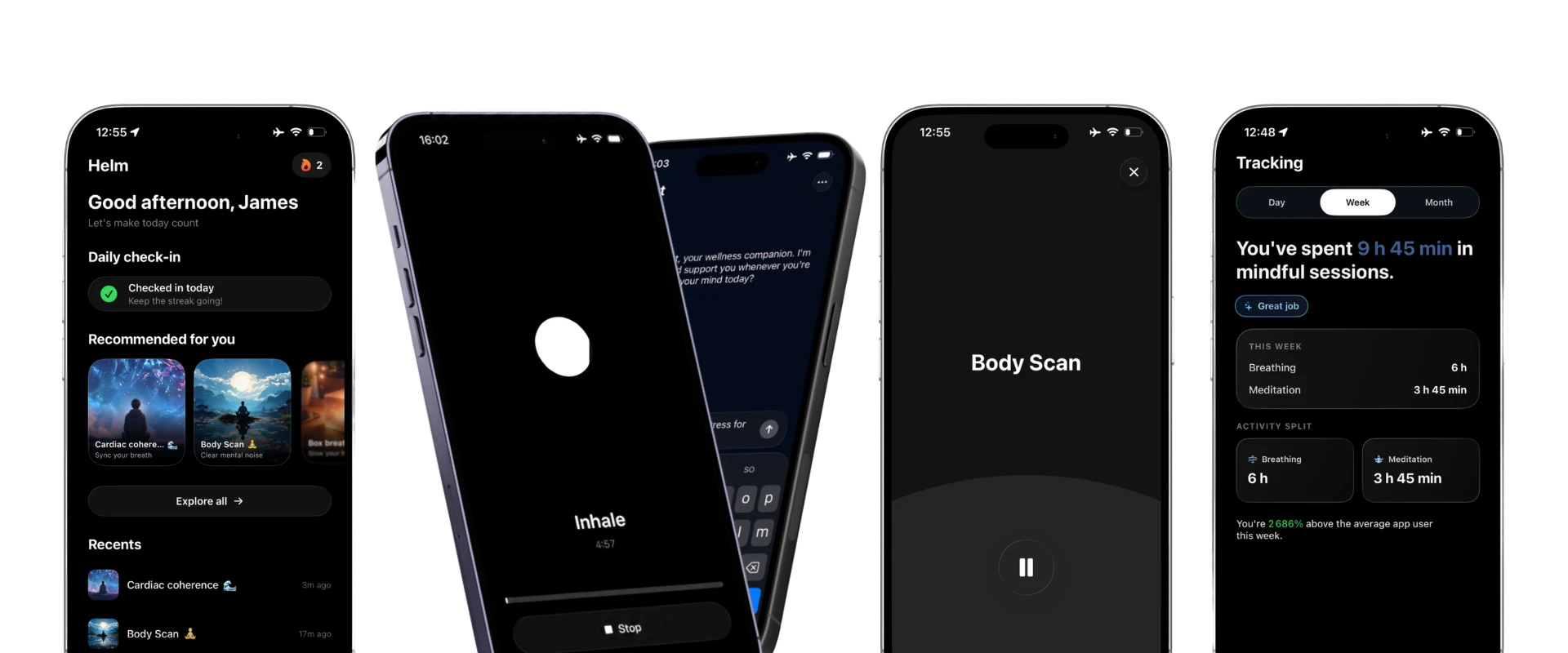
If you want better HRV, focus on small repeatable habits and judge success by your trend, your energy, and how quickly you bounce back from stress. If you want a simple way to practice guided breathing resets, try Helm, an iOS mental wellness app designed to manage stress and improve focus.
Usually 2 to 6 weeks. If sleep, training load, and alcohol are the main issues, many people notice a better weekly average within a month, even if daily readings still bounce around.
Yes, paced breathing can raise HRV acutely during and after practice, especially with longer exhales. Lasting change usually comes from repeating it often enough that overall recovery improves too.
Sometimes, especially in sensitive people. A modest dose may not matter much, but excess caffeine, poor sleep, and using it to push through fatigue can combine to drag HRV down.
No, one low reading is not automatically a problem. Hard training, travel, dehydration, emotional stress, or the start of illness can all lower HRV temporarily.
Join thousands using Helm to manage stress, improve focus, and build lasting healthy habits.