HELM
The Helm Blog
Insights on nervous system regulation, mental clarity, and the science of optimal performance.
HELM
HELM
HELM
HELM
HELM
HELM
Insights on nervous system regulation, mental clarity, and the science of optimal performance.
Helm is the #1 app to optimize your mind, breathe better, and master your focus. Combine science-backed breathwork and meditation into your daily protocol to build resilience.
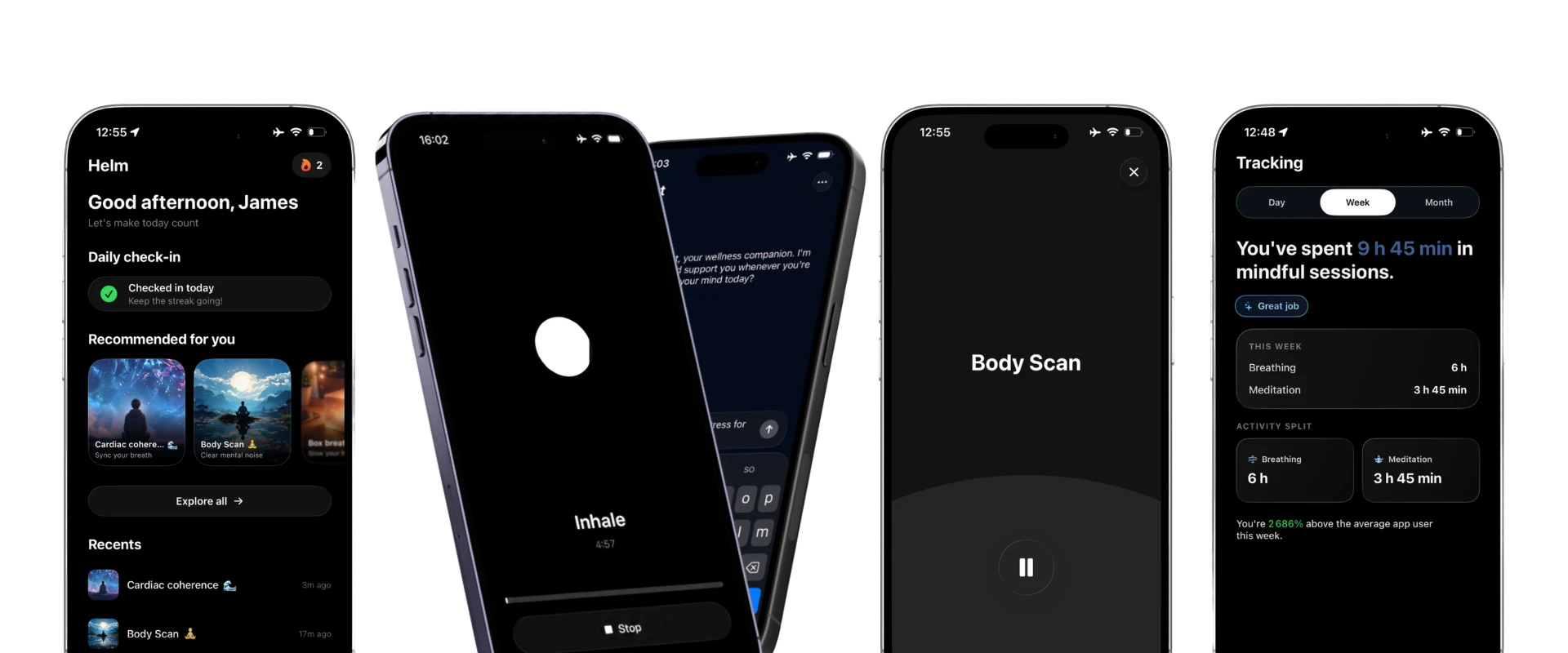
You have more influence over your stress response than it often feels like, and breathing is the most reliable entry point. In this guide to huberman breathing techniques explained, you will learn a small set of patterns that target two levers you can control right now: inhale and exhale timing, and breathing depth. Used well, they can lower perceived stress quickly, reduce physical anxiety symptoms, and improve attention without needing perfect conditions.
A key idea is that the exhale is a brake. Extending it tends to nudge the nervous system toward calm, while repeated deep inhales can increase arousal. The goal is not to “breathe more,” it is to breathe with the right shape for the moment. Below you will get the how, the why, and the safety notes that keep breathwork supportive instead of overwhelming.

Several techniques get grouped under this label, but they usually refer to two main tools: the physiological sigh (a fast downshift) and longer, steady-paced breathing (a slower, steadier reset). Both use breathing pattern as a nervous system signal, not as a performance challenge.
Here is the quick map:
If you want a separate, very structured option for on-the-spot calm, box breathing can be easier to remember under pressure, see box breathing for instant calm.
Breathing is tightly linked to autonomic control, including heart rate, blood pressure signaling, and how “threat ready” your body feels. When your breathing becomes fast and shallow, your body can interpret that as urgency. When it becomes slower and more spacious, especially with a longer exhale, you send the opposite message.
One reason slow breathing works is that it can increase parasympathetic activity and improve autonomic balance, often reflected in heart rate variability measures. Research summaries and clinical overviews on breath control and relaxation describe how breath pacing can reduce stress arousal over minutes, not weeks, see Harvard Health Publishing.
Another mechanism is carbon dioxide tolerance. Many anxious states come with “overbreathing,” which lowers carbon dioxide too much and can contribute to lightheadedness, tingling, and a sense of air hunger. Training a slower, smoother rhythm helps you rebuild comfort with normal carbon dioxide levels, which often reduces panic-like sensations.
Finally, the “double inhale then long exhale” pattern of the physiological sigh likely helps reopen small airways and improves ventilation efficiency, which may explain why it can feel instantly relieving in the chest. For a broader clinical overview of relaxation practices, including breathing, see NCCIH.
Use this when you notice a sharp stress spike, a rush of irritability, or that feeling of “I cannot get a full breath.” The physiological sigh is designed to be quick, discreet, and repeatable.
Keep the effort low. The second inhale is small. The exhale is the main event.
The physiological sigh is most useful for moments where you need a fast state shift, for example:
It is less useful as a long meditation substitute. Think of it as a reset button that clears the peak.
If you push the inhales too hard, you can drift toward hyperventilation and feel dizzy. Keep it gentle, sit down if you are prone to lightheadedness, and stop if you feel tingling or numbness. If you have respiratory disease, heart rhythm concerns, or you are pregnant, consider clinician guidance before doing intensive breath practices.
Once the peak stress has passed, longer breathing practices help your body stay regulated, not just temporarily relieved. Cyclic sighing is a longer form of “deeper inhale, longer exhale” repeated for several minutes, while slow cadence breathing focuses on smooth, even pacing.
A practical target for many people is 5 to 6 breaths per minute, often with a slightly longer exhale. This range is commonly used in cardiac coherence style training and can support steadier attention and emotional balance. If you want a structured introduction, see cardiac coherence breathing in 5 minutes.
Option A: Cyclic sighing (5 minutes)
Option B: Slow nasal cadence (5 minutes)
The main marker is not the exact count, it is smoothness without strain. If your breath becomes jerky, shorten the exhale slightly.
In the first minute, you may notice restlessness or an urge to take a bigger breath. That is often carbon dioxide sensitivity, not true oxygen need. Stay gentle. By minutes 2 to 4, many people feel a settling in the chest, warmer hands, or a calmer facial expression.
Evidence reviews suggest slow breathing can influence autonomic markers and stress physiology. For an accessible research overview on slow breathing and autonomic effects, see this PubMed-indexed paper: Effect of slow breathing on autonomic functions.
The biggest mistake is using the same technique for every goal. Choose a pattern that matches the direction you want your nervous system to move, then keep it short and consistent. Right technique, right time beats long sessions done inconsistently.
If you notice frequent dizziness, chest pain, fainting, or panic escalation, stop and seek medical advice. Breathwork should feel supportive, not like a test.
The most useful takeaway from these practices is not a single magic pattern, it is the skill of matching breath to state. Use physiological sighs to interrupt a spike, then use slow cadence breathing to keep your baseline calmer and more resilient. Keep sessions short, emphasize the exhale, and prioritize smoothness over intensity.
With a few minutes a day, many people find they recover faster after stress, feel less reactive in conversations, and settle into focus more easily. Consistency matters more than duration, and gentleness matters more than willpower. If you want guided versions of these resets, you can try Helm, an iOS mental wellness app designed to manage stress and improve focus through guided breathing resets.
Most people do 2 to 5 rounds. Stop sooner if you feel lightheaded, tingly, or overstimulated, then return to normal breathing and try a slower, gentler pace.
It is generally safe, but people with respiratory disease, heart rhythm issues, pregnancy, or a history of panic triggered by breath control should start gently and consider clinician guidance.
For steady calming and daily practice, nasal breathing is often more regulating. For the physiological sigh, a mouth exhale can feel more relieving, especially during acute stress.
Yes, if you avoid overly forceful inhales. A smooth rhythm with a slightly longer exhale can reduce jittery arousal and support sustained attention, especially before demanding tasks.
That can happen with overbreathing or too much control. Shorten the session, reduce depth, keep the exhale easy, or switch to a non-breath focus. If it persists, seek professional support.
Join thousands using Helm to manage stress, improve focus, and build lasting healthy habits.