HELM
The Helm Blog
Insights on nervous system regulation, mental clarity, and the science of optimal performance.
HELM
HELM
HELM
HELM
HELM
HELM
Insights on nervous system regulation, mental clarity, and the science of optimal performance.
Helm is the #1 app to optimize your mind, breathe better, and master your focus. Combine science-backed breathwork and meditation into your daily protocol to build resilience.
Anxiety is not just a thought problem, it is a body state. When your system predicts danger, your breathing gets shallow, your heart rate rises, and attention narrows. The vagus nerve is a major pathway that helps shift you back toward safety by supporting parasympathetic regulation and more flexible stress recovery.
“Vagal tone” is often used as shorthand for how effectively this pathway helps your body return to baseline after stress. You cannot “hack” it instantly, but you can practice skills that reliably nudge your physiology toward calm. Over time, these repeated signals of safety can improve stress resilience and reduce the intensity and duration of anxious spikes.
One important note: vagal tone is not a vibe. It is typically inferred through measures like heart rate variability (HRV) and respiratory sinus arrhythmia, and it changes with sleep, illness, training, hormones, and chronic stress.

The vagus nerve is the longest cranial nerve, connecting brain and body through branches that influence heart rhythm, breathing, digestion, swallowing, and voice. It carries signals in both directions, which is why anxiety can show up as a “gut feeling,” throat tightness, nausea, or sudden heat.
In practical terms, “higher vagal tone” usually points to better autonomic flexibility: you can mobilize when needed, then recover sooner. HRV is one common proxy, and it is associated with emotion regulation capacity, although it is not a diagnostic tool. For a clear clinical overview of vagus nerve function and symptoms, see this Cleveland Clinic guide.
Also, be careful with oversimplified claims. Vagal tone is shaped by many variables, including fitness, inflammation, trauma history, and medication. The goal is not constant calm. The goal is fast recovery and steadier baseline.
If you only do one thing, make it breathing with a longer exhale. Slower breathing patterns can increase baroreflex sensitivity and improve autonomic balance, which is why they are used in many clinical and performance settings. Research reviews show slow breathing can influence HRV and stress physiology, especially when practiced consistently. A helpful overview is in Frontiers in Human Neuroscience.
Use this sequence when you notice early anxiety signs: chest tightness, racing thoughts, jaw clenching, or doom scrolling.
This works best when you aim for air hunger-free breathing. If you feel lightheaded, you are pushing too much air. Reduce the depth, slow the pace, and keep the exhale unstrained.
A longer exhale tends to increase vagal influence on the heart via respiratory sinus arrhythmia. Put simply, exhaling is naturally calming for many people because it supports cardiac slowing and reduces threat physiology.
If anxiety includes panic symptoms, the gentlest version is often best: nasal breathing, low volume, and a slightly longer exhale. You are not trying to “win” at relaxation. You are teaching your body that it can be safe again.
Breath is the cornerstone, but it is not the only lever. The vagus nerve also interfaces with the muscles of the face, throat, and larynx, plus reflexes tied to temperature and pressure. These options are useful if breathing feels hard during anxiety.
Humming, chanting, or simply making a soft “mmm” on the exhale can create vibration around the larynx and slow exhale timing. It also encourages nasal breathing and reduces mouth breathing that can accompany anxiety.
Try 6 rounds: inhale quietly through the nose for 3 to 4 seconds, then hum for 6 to 8 seconds. Keep volume low. Your aim is steady vibration, not performance.
A brief cold stimulus on the face can trigger aspects of the mammalian dive response, lowering heart rate in many people. Use it as a short reset, not a stress test. Splash cool water on your cheeks and around the eyes for 10 to 20 seconds, or hold a cool compress there while breathing slowly.
This can be especially helpful when anxiety feels like adrenaline without an exit. If you have heart rhythm issues, talk to a clinician before using cold stimuli.
Anxiety commonly recruits jaw clenching and neck tension, which can keep threat signals looping. Try a slow, pain-free range:
You are pairing movement with downshift breathing, which helps the nervous system learn a new default.
Most people only use regulation tools when they are already overwhelmed. That is like learning to swim in a storm. Skill building happens when you practice at low intensity, so your body can associate the technique with success.
Pick one tool and practice it twice daily for two weeks. Two minutes is enough to change state, and repetition builds reflex. If you want the evidence-based rationale and mechanisms, this breakdown of the science behind breathing exercises connects the dots between breath pace, CO2 tolerance, and autonomic shifts.
To make it automatic, anchor it to an existing habit. After brushing teeth, do 10 slow breaths. Before opening email, do 60 seconds of humming exhale. This trains state control before you need it.
Instead of chasing a number, track functional outcomes:
These are the lived signs of improving vagal flexibility.
Most gentle vagal tone exercises are low risk, but anxiety can overlap with medical issues. If you have chest pain, fainting, new shortness of breath, or a history of arrhythmia, get medical evaluation. Breathing practices should feel steady, not intense.
Be cautious with any technique that includes long breath holds, strong hyperventilation, or aggressive cold exposure. These can worsen panic symptoms, trigger dizziness, or create unsafe drops in blood pressure for some people. For trauma survivors, some internal-focus practices can also bring up activation. The safest approach is choice and titration: make it smaller, slower, and easier.
If anxiety is persistent, consider combining self-regulation with professional care. Evidence-based therapies and clinician guidance can help you work with underlying patterns, not just symptoms. A general resource on stress and relaxation approaches is available from the National Center for Complementary and Integrative Health.
Vagal tone is best understood as your body’s capacity to recover, not as a single switch you flip. The most reliable vagal tone exercises for anxiety are simple: slower nasal breathing with a longer exhale, brief sigh-based resets, gentle humming, cold-face cooling, and small releases of jaw and neck tension. Practice them when you are only mildly stressed so they are available when stress spikes.
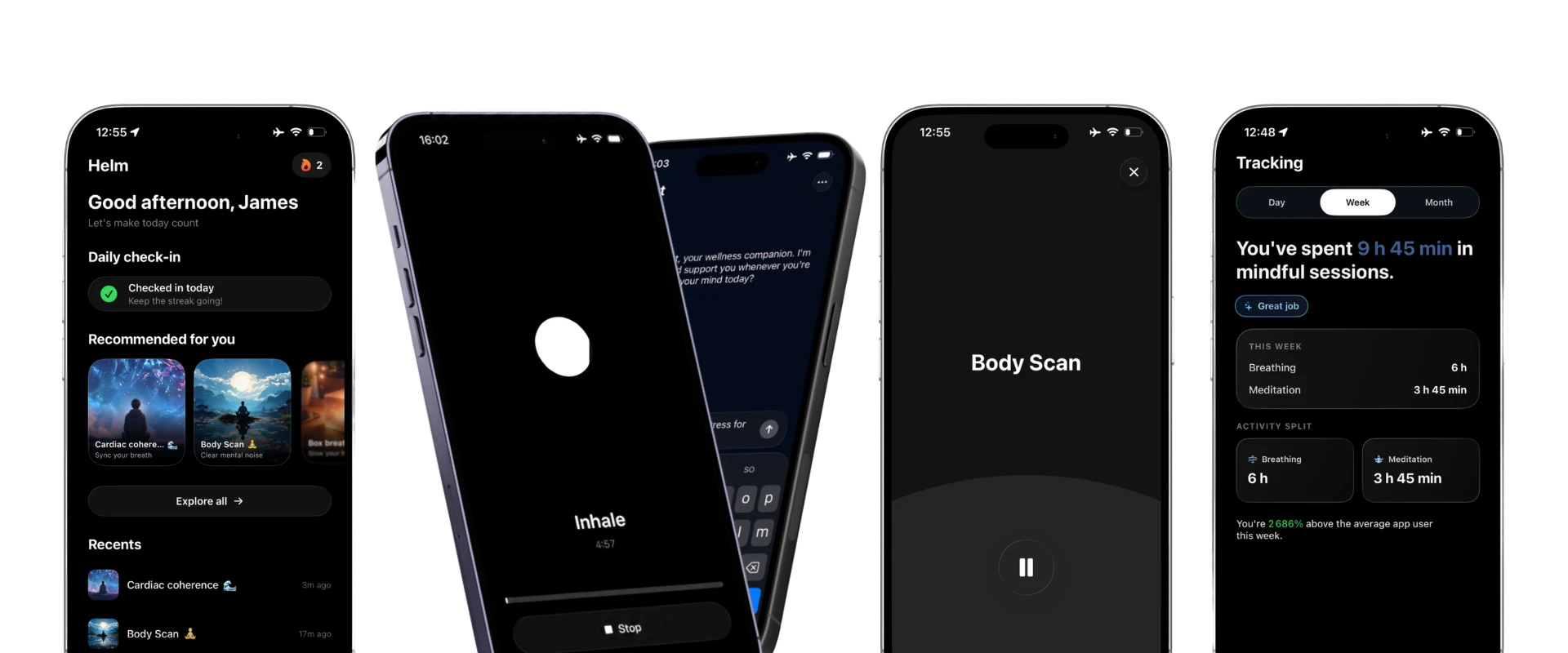
Over time, these techniques build a felt sense of safety that can shorten anxious episodes and widen your window of tolerance. If you want guided, repeatable resets on your phone, try Helm, an iOS mental wellness app designed to manage stress and improve focus through guided breathing resets.
Many people feel a shift in 1 to 5 minutes, but lasting change comes from repetition. Practice daily for 2 to 4 weeks to improve recovery speed and baseline steadiness.
A gentle nasal inhale with a longer nasal exhale is a strong default. Start with 4 seconds in, 6 to 8 seconds out, and keep the breath low effort.
Yes, it can help by extending the exhale, encouraging nasal breathing, and adding soothing vibration around the throat. It is not magic, but it is often effective and easy.
A cold-face splash can be helpful, but full cold exposure can be too activating for panic-prone people. Start small, avoid extremes, and stop if you feel dizzy or worse.
You cannot feel the nerve directly, but you can observe recovery: calmer breathing, less urgency, warmer hands, fewer gut flares, and quicker return to normal after stress. Those are practical markers.
Join thousands using Helm to manage stress, improve focus, and build lasting healthy habits.