HELM
The Helm Blog
Insights on nervous system regulation, mental clarity, and the science of optimal performance.
HELM
HELM
HELM
HELM
HELM
HELM
Insights on nervous system regulation, mental clarity, and the science of optimal performance.
Helm is the #1 app to optimize your mind, breathe better, and master your focus. Combine science-backed breathwork and meditation into your daily protocol to build resilience.
Breathing happens automatically, but it is also one of the few body functions you can steer on purpose. That is the doorway into what is breathwork, a set of techniques that use deliberate breath patterns to shift how you feel in your body and mind. Some methods are gentle and quiet, others are more intense, but the goal is usually the same: better nervous system regulation.
If you have ever noticed your breath getting shallow before a meeting, or your chest tightening during an argument, you have already felt the breath-stress loop. Breathwork helps you interrupt that loop in real time. It is not a personality trait, a spiritual requirement, or a perfect calm state you must achieve. It is a skill you can practice, then apply when life is messy.

At its core, breathwork is intentional breathing done to create a specific internal effect, such as calm, alertness, emotional release, or steadier focus. It can include slow diaphragmatic breathing, counted rhythms, humming exhalations, or more activating patterns that temporarily increase ventilation.
A helpful way to think about breathwork is as training your “breathing settings.” Most of us default to short, upper-chest breaths under pressure, which can amplify stress signals. Breathwork teaches you to change the input (breathing rate, depth, and exhale length) so your brain and body receive a different message.
Breathwork is closely related to mindfulness and meditation, but it is not the same thing. Meditation often trains attention and awareness; breathwork uses breath as an active lever to shift physiology. Many people combine both, especially when stress or anxiety makes silent sitting feel impossible.
Breath is a two-way bridge between mind and body. When you lengthen the exhale or slow the breathing rate, you often nudge the body toward parasympathetic activation, the branch associated with rest and recovery. This is one reason controlled breathing shows up in stress management and relaxation training across clinical settings.
Mechanistically, slow breathing influences heart rate variability, blood pressure regulation, and perceived stress. Reviews and clinical discussions commonly note that paced breathing can improve autonomic balance and emotional regulation when practiced consistently. You can explore a plain-language overview of breath control and stress response from Harvard Health Publishing.
Breathwork also works because attention follows breath. When you count, feel air at the nostrils, or track the belly rising, you are repeatedly returning to a single anchor. That shift can reduce mental noise and help you exit spirals of threat-focused thinking. For a deeper look at the evidence and why even short practices can help, see Science behind breathing exercises: feel calmer in 5 minutes.
It is worth keeping expectations realistic. Breathwork is not a switch that eliminates stress forever. It is more like a volume knob: it can lower intensity and widen your window of tolerance so you can choose your next step instead of reacting automatically.
Breathwork is an umbrella term. The differences matter, because the right technique depends on your goal, your stress level, and your health considerations.
Downshifting breathwork (calming): These techniques emphasize a slower pace and longer exhale, often through the nose. They are useful for anxiety relief, winding down at night, and “stress spikes” during the day. Many people do well starting here because the intensity is low and the signal to the body is clear: you are safe enough to soften.
Balancing breathwork (steady focus): These are rhythmic, measured patterns that feel centering rather than sedating. A common example is equal-count breathing or a simple box pattern. If you want a quick, practical introduction, What is box breathing: a quick reset for stress and focus breaks down how it works and how to use it.
Energizing breathwork (activating): Faster breathing, stronger inhales, or breath pumping can increase alertness and sensation. Used skillfully, it can be helpful before movement or creative work. Used carelessly, it can feel like anxiety. This category is where people most often overdo it, so it benefits from gradual experimentation and clear stop rules.
Emotion-focused or somatic approaches: Some practices pair breath with body awareness, gentle movement, sound, or guided imagery. The intention is to process emotion through felt sensation rather than analysis alone. This can be powerful, especially if you tend to “think your feelings” instead of experiencing them.
Therapeutic or intensive sessions: Longer, more intense breathing sessions are sometimes used in structured settings. If you are curious, use credible resources and prioritize screening, facilitation quality, and integration support. The National Center for Complementary and Integrative Health offers a grounded overview of relaxation approaches and considerations.
This routine is designed to be low intensity, broadly safe for most people, and effective for state change without strain. Do it seated or lying down.
Two tips that make this work better: keep the exhale unhurried, and stop before you feel you “need” to stop. Consistency beats intensity.
Breathwork is generally low risk when it is gentle and self-paced, but it is not one-size-fits-all. The biggest red flag is any practice that pushes you into dizziness, tingling, panic, or a sense of losing control. Those signs often mean you are changing carbon dioxide levels too quickly or overriding your body’s limits.
Use extra caution, or consult a qualified clinician, if you have cardiovascular disease, uncontrolled high blood pressure, seizure history, glaucoma, significant asthma, or are pregnant. Also be mindful if you have a trauma history, because internal focus can sometimes amplify sensations or memories. If you want a clinical perspective on how stress affects the body and why regulation skills matter, the American Psychological Association provides a reliable overview.
Practical safety rules:
If breathwork reliably triggers fear, dissociation, or worsening symptoms, that is not failure. It is a signal to choose a gentler method or work with a trained professional.
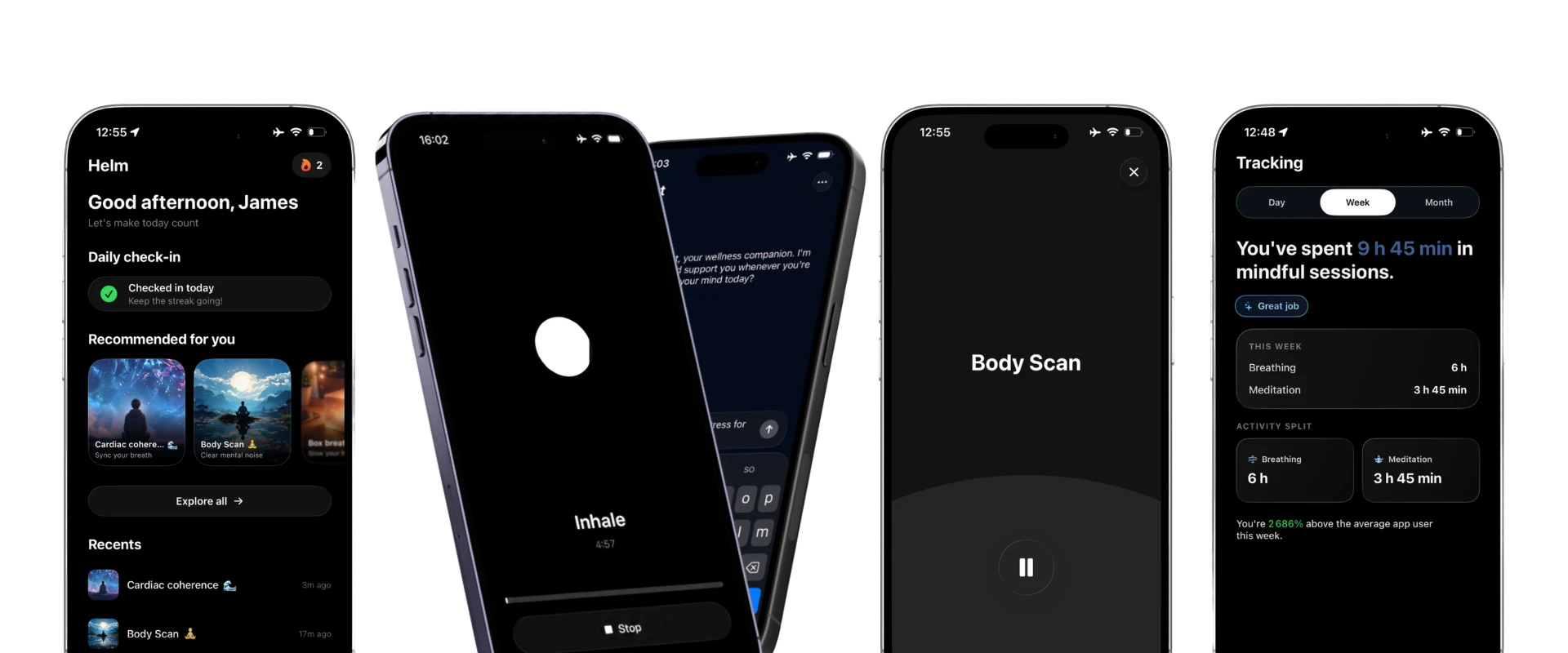
Breathwork is not magic, but it is one of the most direct ways to influence how you feel because it sits at the intersection of physiology and attention. Start with calming techniques that lengthen the exhale, practice for a few minutes most days, and treat intensity as optional. Over time, you are training your system to recover faster after stress, not to avoid stress entirely. If you approach breathwork as a skill, with curiosity and clear safety boundaries, it can become a reliable reset you can use before conversations, after difficult news, or when your mind will not stop looping. When you want guided breathing resets on your phone, try Helm, an iOS mental wellness app designed to manage stress and improve focus through guided breathing resets.
What is breathwork for beginners who feel anxious during breathing exercises?
Start with nasal breathing and a longer exhale, like 4 seconds in and 6 seconds out. Keep it gentle and stop before dizziness or tingling shows up.
How often should I practice breathwork to see benefits?
Aim for 3 to 7 minutes, 4 to 6 days per week. Consistency matters more than long sessions, and short practices can still improve regulation.
Is breathwork the same as pranayama?
Pranayama is a traditional set of yogic breathing techniques. Breathwork is a broader modern umbrella that can include pranayama, clinical paced breathing, and somatic methods.
Can breathwork help with sleep?
Yes, especially slow nasal breathing with a longer exhale. Use it as a wind-down cue 10 to 20 minutes before bed and keep lighting and stimulation low.
What should I feel during breathwork?
Common signs include slower thoughts, softer muscles, and a steadier heartbeat. Strong tingling, dizziness, or panic suggests the practice is too intense or too fast for you.
Join thousands using Helm to manage stress, improve focus, and build lasting healthy habits.