HELM
The Helm Blog
Insights on nervous system regulation, mental clarity, and the science of optimal performance.
HELM
HELM
HELM
HELM
HELM
HELM
Insights on nervous system regulation, mental clarity, and the science of optimal performance.
Helm is the #1 app to optimize your mind, breathe better, and master your focus. Combine science-backed breathwork and meditation into your daily protocol to build resilience.
Holotropic breathwork is a high intensity, accelerated breathing practice designed to shift consciousness, release emotion, and surface insight. People often describe tingling, warmth, shaking, vivid imagery, or a strong emotional arc that moves from activation to relief. Because it intentionally pushes the body toward a hyperventilation like state, it can also bring discomfort and risk if approached casually.
In a culture that treats breathwork as a quick fix, holotropic breathwork sits in a different category. It is closer to a structured, facilitation based self exploration process than to everyday stress management breathing. This article will help you understand what is happening in your body and mind, what the research can and cannot say, who should not do it, and how to integrate the experience so it supports mental wellness rather than destabilizing it.

The core method uses sustained, faster breathing paired with music and a supportive setting. The aim is to create a temporary shift in perception and emotional processing, often described as an altered state.
From a physiology angle, the most important mechanism is changes in carbon dioxide balance. When you breathe rapidly, you tend to exhale more carbon dioxide than your body is producing. That can reduce carbon dioxide in the blood and trigger symptoms commonly associated with hyperventilation, like lightheadedness, tingling in hands or lips, chest tightness, and muscle cramping. For a plain language overview of hyperventilation symptoms and why they happen, see MedlinePlus on hyperventilation.
Those sensations are not automatically dangerous, but they are signals that you are moving far from normal homeostasis. In the right container, that intensity can feel meaningful, even cathartic. In the wrong container, it can feel like panic, dissociation, or loss of control.
The psychological layer is just as important. The combination of breath, music, and attention can reduce habitual mental filtering, letting emotion and memory networks surface. Some people find this helps them re process grief, fear, or long held tension. Others may feel flooded. Because the state is non ordinary, your nervous system may treat it as either a corrective experience or a threat, depending on context, history, and support.
Evidence is still emerging. You can browse the growing research landscape through PubMed results for holotropic breathwork. When you read studies, notice sample sizes, screening criteria, facilitator training, and follow up integration, since these factors strongly shape outcomes.
Many participants report benefits like emotional relief, increased self compassion, spiritual connection, and a clearer sense of meaning. These effects likely come from a blend of factors: intense interoception, music driven emotional access, the supportive group setting, and the mind’s capacity to update old patterns when it feels safe.
Commonly reported benefits include:
The limits matter. Holotropic breathwork is not a guaranteed trauma treatment, and it is not a substitute for therapy or medical care. If you are seeking reliable, lower intensity regulation tools for daily life, you may get more consistent results from practices that directly train autonomic balance. For example, fast nervous system reset techniques can be more predictable when stress spikes in the middle of a workday.
A useful mental model is to separate “state change” from “trait change.” Holotropic breathwork may produce a powerful state shift, but lasting change requires integration: sleep, reflection, behavior changes, and sometimes skilled clinical support.
Because the practice can provoke intense physical and psychological responses, screening is essential. Holotropic breathwork is often contraindicated for people with certain cardiovascular, neurological, or psychiatric vulnerabilities.
Avoid or seek medical clearance and specialist guidance if you have:
Even without these, consider your current stability. If you are in acute crisis, severely sleep deprived, actively using substances, or newly off medication, your system may be less resilient.
It can help to understand that rapid breathing can overlap with panic physiology. If you are prone to panic attacks, you are not “weak,” you are sensitive to interoceptive cues. Education can reduce fear. The National Center for Complementary and Integrative Health overview of relaxation approaches is a good starting point for comparing intensity levels across practices.
Finally, facilitation quality matters. Look for clear consent practices, trauma informed language, and post session support. A responsible setting welcomes questions about medical screening, boundaries, and what happens if you need to stop.
A typical session includes orientation, intention setting, the breathing phase with music, and a closure period. Many formats also include creative expression or journaling to help translate the experience into memory.
Preparation is less about “doing it right” and more about giving your nervous system the best odds of feeling safe. In the 24 to 48 hours beforehand, aim for steady blood sugar, hydration, and sleep. Arrive with a flexible intention, like “show me what I need to see,” rather than a demand for a specific outcome.
If you want a gentler bridge before attempting an intense method, use this short, safer primer to practice regulation skills without pushing into hyperventilation:
This builds interoceptive tolerance and helps you learn the difference between intensity that is workable and intensity that is overwhelming.
Integration is where insight becomes usefulness. Right after a session, your system may be open, tender, and more suggestible. Treat the next day as a recovery window.
Start with basics: eat, hydrate, and protect sleep. Sleep is not optional here, it is part of memory reconsolidation and emotional processing. If you want practical support for that piece, breathwork for deeper sleep can help you downshift at night without recreating the session’s intensity.
Then translate the experience into something actionable. Ask:
Keep integration grounded. A common pitfall is making big life decisions while still in the afterglow. Instead, choose one small behavior change that aligns with your insight, and repeat it for two weeks.
If difficult material surfaced, consider talking with a qualified mental health professional. The American Psychological Association resources on stress and coping can help you orient toward evidence based support. The goal is not to “analyze the session to death,” but to stabilize, make meaning, and build capacity.
Holotropic breathwork can be profound, but it is not casual. The same ingredients that create catharsis, fast breathing, strong music, and altered state intensity can also create overwhelm when screening, facilitation, or integration are weak. If you are healthy, well supported, and genuinely called to deep inner work, it may offer a rare kind of emotional access and perspective shift.
Treat safety as part of the practice, not a barrier to it. Start with foundational regulation skills, know your contraindications, and plan your integration before you begin. When in doubt, choose gentler breath practices that train calm without pushing physiology to extremes, then build up gradually as your capacity grows.
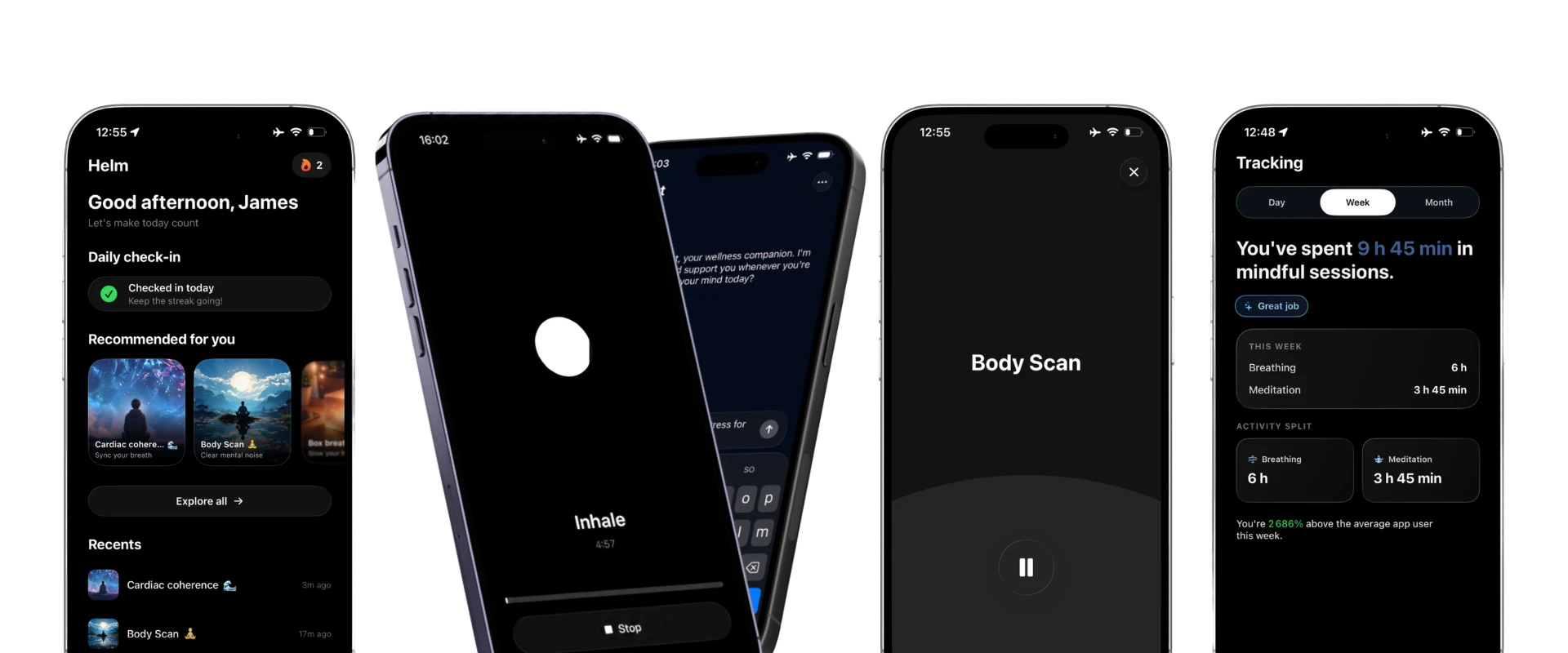
If you want a simple, guided way to practice short breathing resets for stress and focus, try Helm, a mobile mental wellness app designed to help you manage stress and improve focus through guided breathing resets.
It depends on health history and stability. Beginners should prioritize screening, choose a well held setting, and start with gentler breath practices first to build body awareness and tolerance.
Some people report relief, but the intensity can also mimic panic sensations. If you are anxiety prone, work with a qualified facilitator and consider lower intensity techniques for day to day regulation.
Most people do it occasionally, not daily. Spacing sessions allows the nervous system to recover and gives time for integration, sleep, and behavioral follow through.
Hydrate, eat a steady meal, and protect sleep. Journal key moments, choose one small actionable change, and seek professional support if you feel destabilized or overwhelmed.
Yes. Rapid breathing can lower carbon dioxide and contribute to tingling, lightheadedness, or cramping. If symptoms feel intense, slow down, pause, and re orient to your environment.
Join thousands using Helm to manage stress, improve focus, and build lasting healthy habits.