HELM
The Helm Blog
Insights on nervous system regulation, mental clarity, and the science of optimal performance.
HELM
HELM
HELM
HELM
HELM
HELM
Insights on nervous system regulation, mental clarity, and the science of optimal performance.
Helm is the #1 app to optimize your mind, breathe better, and master your focus. Combine science-backed breathwork and meditation into your daily protocol to build resilience.
If you want to learn how to fall asleep in 5 minutes with breathwork, the goal is not to knock yourself out on command. It is to shift your body out of alert mode fast enough that sleep can happen on its own. Most people stay awake because their nervous system is still acting like the day is not over. Your thoughts speed up, your chest feels tight, and every small sensation seems louder.
Breathwork helps because it gives your brain a clear signal that you are safe, still, and ready to rest. Research on slow breathing and the nervous system suggests that slower, more controlled breathing can support relaxation, emotional regulation, and a calmer physiological state. When used at bedtime, paced breathing can lower mental noise and reduce the effort of trying to sleep. That matters, because trying harder is often what keeps people awake.

Sleep starts with a state change, not a thought. You do not think your way into deep rest. You downshift your physiology into it. Slow exhalations can gently increase parasympathetic activity, which is the branch of the nervous system associated with rest and recovery. That is why breathwork can feel effective even when your mind is still a little busy.
Another reason it works is attentional load. When you count breaths or follow a simple rhythm, you give your brain one low-stakes task. That interrupts rumination without creating a new performance goal. If you have ever noticed that you stay awake longer the moment you check the clock, you have seen how quickly pressure wakes the system back up.
Breathwork is also practical because it pairs well with basic sleep hygiene guidance. A dark room, a cool temperature, and less late-night stimulation all make breathing exercises more effective. Breathwork is not magic, but it is a reliable bridge between being tired and actually falling asleep.
Use this routine in bed, with the lights off, after you have stopped looking at screens. The point is ease, not perfect technique. Breathe through your nose if comfortable, and keep the breath gentle.
If you prefer a more structured rhythm, this guide to the 4-7-8 breathing method for sleep can be a helpful variation. Some people respond better to a set count, especially when their mind keeps looking for a pattern to follow.
A racing mind usually means your body still feels unfinished. Thoughts often seem like the problem, but underneath them is often residual activation. Before changing techniques, make your exhale softer and slightly longer. Many people accidentally breathe too deeply at night, which can feel stimulating instead of calming.
You can also pair the breath with a simple phrase on each exhale, such as "down" or "let go." This works because it gives your attention a place to land without creating a full inner conversation. The combination of slow breath and minimal language is often enough to interrupt the spiral.
If anxiety is the main barrier, it can help to build skill outside bedtime too. Practicing during the day makes the pattern feel familiar at night. This article on how to reduce anxiety naturally with breath explains why daytime reps can make evening calm come faster.
The biggest mistake is treating breathwork like a test. If you are thinking, "I must be asleep in five minutes," your body hears pressure, not safety. Sleep responds to permission, not force. Use the breath to create conditions for sleep, then let go of the outcome.
Another common mistake is breathing too hard. People often take big dramatic inhales because they think more air means more relaxation. At bedtime, that can backfire. Gentle, quiet breathing is usually better than deep breathing. If you feel lightheaded, tense, or oddly alert, soften the inhale and shorten the count.
Timing matters too. If you start breathwork right after intense scrolling, a late workout, or emotional conversation, you may need a few extra minutes to settle. A short transition helps. Even one minute of stillness before you begin can improve results. If sleep problems keep returning despite good habits, this insomnia overview can help you understand when broader support may be useful.
Breathwork is powerful, but it is not a fix for everything. If you are regularly lying awake for long stretches, waking often, or feeling exhausted despite enough time in bed, there may be more going on. Chronic stress, pain, sleep apnea, depression, medication effects, and irregular schedules can all disrupt sleep in ways breath alone cannot solve.
It is also worth noting that the best breathing technique is the one you can do without strain. Some people love counted breathing. Others do better with a simple longer exhale or body scan. The real target is not a perfect method. It is reduced arousal. That is the mechanism that matters.
If your sleep difficulty lasts for weeks, affects daytime functioning, or comes with snoring, gasping, panic, or low mood, speak with a qualified clinician. Breathwork can support better sleep, but persistent insomnia deserves a fuller assessment and a more complete plan.
The fastest path to sleep is often the least forceful one. Instead of chasing unconsciousness, use your breath to create a clear physiological message: the day is over, your body can soften, and nothing needs solving right now. A longer exhale, a lighter inhale, and less effort can be enough to tip the system toward rest. If you try this tonight, focus on gentleness and repetition, not results. The paradox of sleep is that it comes more easily when you stop gripping for it.
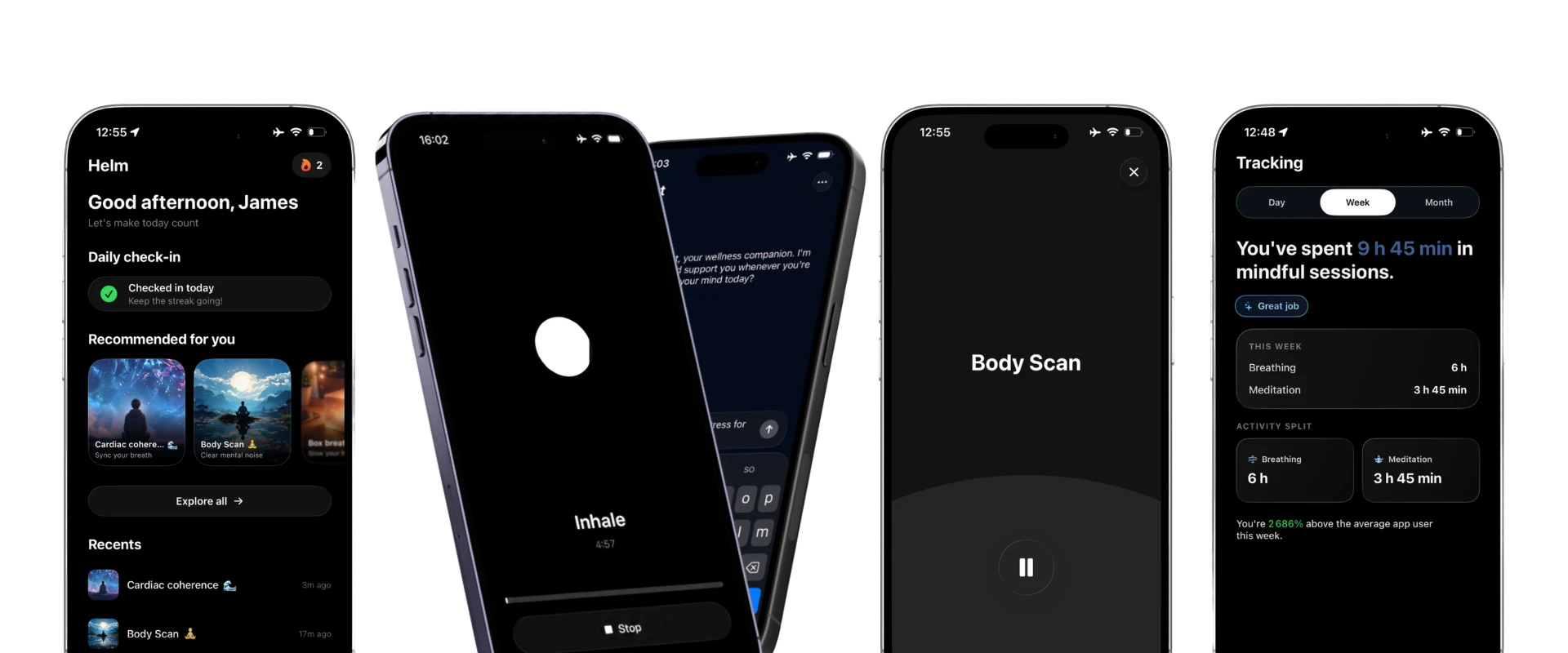
If you want a simple way to practice, try Helm, an iOS mental wellness app designed to manage stress and improve focus through guided breathing resets.
For some people, yes. Breathwork can calm the nervous system quickly, especially if stress or overthinking is the main barrier, but it works best as a cue for sleep, not a guarantee.
A 4-second inhale and 6-second exhale is a strong starting point because it is easy, calming, and less stimulating than more intense techniques.
Use nasal breathing when it feels comfortable, since it is usually gentler and easier to regulate. If congestion makes that hard, do not force it.
If counting feels like work, it can create performance pressure. Switch to a softer cue, like feeling the ribs expand and relax, or silently repeating one calming word.
Practice once at bedtime and a few minutes during the day. Regular repetition teaches your body the pattern, so it feels more automatic when you need it most.
Join thousands using Helm to manage stress, improve focus, and build lasting healthy habits.