HELM
The Helm Blog
Insights on nervous system regulation, mental clarity, and the science of optimal performance.
HELM
HELM
HELM
HELM
HELM
HELM
Insights on nervous system regulation, mental clarity, and the science of optimal performance.
Helm is the #1 app to optimize your mind, breathe better, and master your focus. Combine science-backed breathwork and meditation into your daily protocol to build resilience.
If you have been asking why can't I sleep even when I'm tired, you are describing one of the most frustrating sleep patterns there is. Your body feels drained, your eyes may even burn, yet the moment you lie down, your mind sharpens, your chest feels alert, or you suddenly start thinking about everything you have ignored all day. Feeling tired is not always the same as being ready to sleep.
In many cases, this happens because sleep depends on two systems working together, sleep pressure and nervous system calm. When sleep pressure is high but your body is stuck in a low-grade stress state, you can feel completely depleted and still not drift off. This tired but wired pattern is common during stressful periods, after irregular sleep, or when you start worrying about sleep itself.

Tiredness is a broad feeling, and it can come from mental overload, emotional strain, poor sleep, illness, or long hours awake. Sleepiness is narrower. It is the biological pull toward sleep created by rising sleep pressure and the timing signals of your internal clock. Research on how the circadian system shapes sleep timing helps explain why you can feel worn out at 9 p.m. but not truly sleepy until much later.
When those systems are out of sync, you may feel flat, foggy, and unmotivated, but still not able to cross into sleep. Your brain can be exhausted and vigilant at the same time. That is why people often say, "I am so tired," while also noticing a racing mind, a fast heartbeat, or a second wind right at bedtime.
One major reason is hyperarousal, a well-studied insomnia pattern where the brain and body stay more activated than they should at night. A review of the hyperarousal model of insomnia describes how people with sleep difficulty often show higher cognitive and physiological alertness, even when they feel exhausted. In plain language, the body is tired, but the system responsible for letting go is still scanning, bracing, or anticipating.
Stress is the obvious trigger, but not the only one. Sleep effort itself can become activating. The more you monitor whether you are asleep yet, calculate the hours left, or pressure yourself to perform tomorrow, the more awake you feel. That is why learning ways to calm the nervous system when stress spikes can indirectly improve sleep, even if sleep is not the direct target.
There are also practical triggers that quietly push the brain toward alertness. Bright evening light, stimulating content, caffeine, alcohol, and late work all blur the signal that night has started. Even ordinary device use can delay sleep by suppressing melatonin, as shown in research on evening light exposure from screens. If your evenings feel busy, bright, and mentally loaded, your body may arrive in bed tired but not downshifted.
Yes. Inconsistent sleep timing is a common reason people feel sleepy at the wrong times and alert at bedtime. Sleeping in after a bad night, taking a long afternoon nap, or going to bed much earlier than your body is ready for can weaken the link between bed and sleep. The result is often more time awake in bed, more frustration, and a feeling that your body has stopped cooperating.
There is also a learned component. Your brain quickly forms associations, and if bed becomes the place where you think, scroll, worry, or try hard to sleep, wakefulness can become conditioned there. This is one reason behavioral sleep treatment focuses so strongly on simple patterns, like a stable wake time and using the bed mainly for sleep, rather than trying to force drowsiness.
The goal is not to force sleep. The goal is to lower arousal enough for sleep to happen on its own. If you want a simple starting point, a short coherent breathing practice for calm and focus can help signal safety to the body before bed.
This approach works because it removes the performance pressure that often keeps insomnia going. You are teaching your brain that nighttime is for safety and rest, not evaluation. If you do only one thing consistently, make it a regular morning wake time. A steady wake time helps rebuild sleep drive and can be more powerful than chasing the perfect bedtime.
If this happens occasionally after stress, travel, or a rough week, it may settle once your system calms and your schedule steadies. But if it happens at least a few times a week, lasts for months, or is affecting mood, work, or health, persistent insomnia deserves attention. Clinical guidance on behavioral treatment for chronic insomnia shows that insomnia is treatable, and effective support usually focuses on both habits and arousal, not just sleep tips.
It is also worth looking beyond insomnia if you notice snoring, gasping, restless legs, pain, reflux, hot flashes, medication effects, or heavy anxiety and depression symptoms. These can all leave you feeling tired all day while still interrupting the ability to sleep at night. If the pattern feels relentless, getting assessed is not overreacting, it is practical.
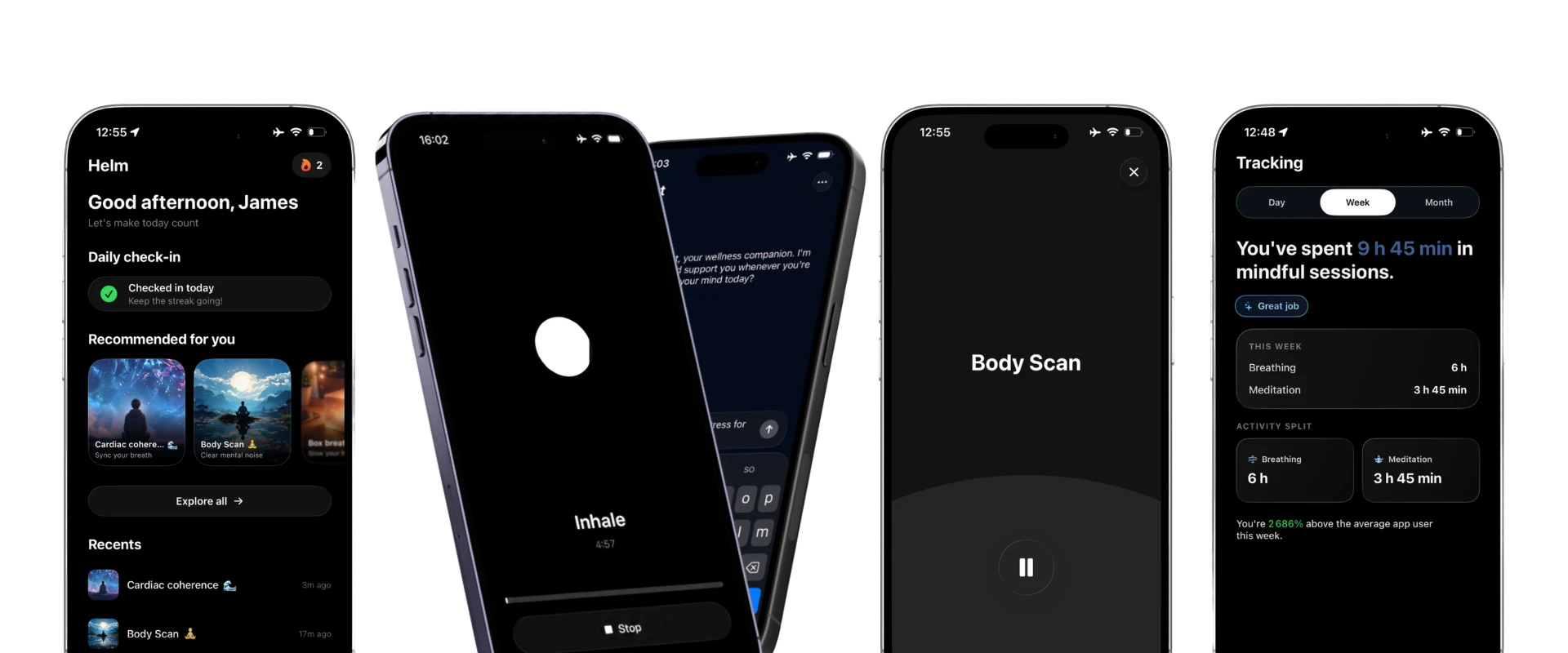
When you feel tired but cannot sleep, the problem is rarely that your body has forgotten how. More often, your sleep drive and your stress system are competing, and alertness is winning for the moment. The most helpful response is usually not trying harder, but reducing activation, protecting your schedule, and stopping the cycle of clock-checking and sleep pressure. Small, repeatable signals of safety often work better than dramatic bedtime hacks. If you want gentle support building that kind of routine, try Helm, an iOS mental wellness app designed to manage stress and improve focus through guided breathing resets.
Mental exhaustion and physiological arousal can happen together. Stress, irregular sleep, late light exposure, and worry about sleep can leave you drained while your brain stays alert.
Yes. Anxiety often raises baseline arousal, which can flatten your energy during the day but make it harder to downshift when bedtime comes.
A short period is fine, but staying in bed awake for too long can strengthen the bed-wakefulness link. If you feel stuck, get up briefly and return when you feel calmer.
If the problem lasts more than a few weeks, happens several nights a week, or affects daily functioning, it is worth speaking with a qualified professional.
Join thousands using Helm to manage stress, improve focus, and build lasting healthy habits.