HELM
The Helm Blog
Insights on nervous system regulation, mental clarity, and the science of optimal performance.
HELM
HELM
HELM
HELM
HELM
HELM
Insights on nervous system regulation, mental clarity, and the science of optimal performance.
Helm is the #1 app to optimize your mind, breathe better, and master your focus. Combine science-backed breathwork and meditation into your daily protocol to build resilience.
If your mind is racing and your body feels wired, power breathe is a practical way to shift gears using physiology, not willpower. It is not about taking the biggest breath you can. It is about changing your breathing pattern so your nervous system gets a clear signal: you are safe enough to settle.
Most people try to calm down by thinking harder. The problem is that stress is often a body-first experience, driven by carbon dioxide balance, airway resistance, and autonomic tone. Breathing is one of the few levers you can use on purpose that touches all of those systems quickly.
In this guide, you will learn what “power” actually means here, why the exhale matters more than you think, and how to do a safe 5-minute reset you can repeat at work, before sleep, or during a spike of anxiety.

In a wellness context, “power” is not intensity. Power is precision, the ability to reliably move from activated to steadier by adjusting rhythm, depth, and especially exhale length.
A useful definition: power breathe is a short, structured breathing reset that emphasizes slower overall pace, nasal breathing when possible, and a slightly longer exhale to nudge the body toward parasympathetic dominance.
It helps to separate three ideas that often get mixed together:
If you want a fast pattern that is easy to remember in stressful moments, you might also like this science behind breathing exercises, which explains why small changes can have outsized effects.
Your breathing rhythm influences heart rate, blood pressure signals, and brainstem circuits that manage threat detection. When you breathe slowly and smoothly, you tend to increase respiratory sinus arrhythmia, a normal pattern where heart rate rises slightly on inhale and falls on exhale. That “fall” is part of what feels settling.
A longer exhale also increases vagal tone cues, which many people experience as less chest tightness and fewer stress surges. You do not need to force relaxation. You are giving your body a pattern it already associates with safety.
Two practical science points matter here:
If you want to go deeper, this open-access review on heart rate variability biofeedback and breathing pace summarizes mechanisms and outcomes in plain research language: review on resonance breathing and HRV.
For a straightforward clinical overview of why slow breathing helps, this resource on slow, deep breathing is also useful: evidence-based overview of slow breathing.
This is designed to feel steady, not extreme. The goal is quiet control, especially of the exhale.
Choose a position that makes your breathing easier. Comfort beats discipline here.
If you have uncontrolled asthma, severe COPD, fainting history, or panic that escalates with breath focus, consider checking in with a clinician first. Keep it mild and stop if you feel worse.
If you prefer a simpler “equal-count” option, use a 4 second inhale and 4 second exhale, then gradually lengthen the exhale over days.
To make this even more reliable, many readers pair it with a steady rhythm like a coherent heart breathing reset, especially when stress shows up as a pounding heart.
Breathwork is powerful, but it is also easy to overdo. These are the most common issues I see when people say breathing “doesn’t work.”
If you take repeated large inhales, you may drift into subtle hyperventilation, even while sitting still. Signs include tingling, tight chest, yawning, and feeling “floaty.” Fix: reduce depth first, then slow pace.
Diaphragmatic breathing is useful, but pushing the belly hard can create tension and backfire. The aim is 360-degree expansion, low ribs widening gently, not a dramatic belly shove.
Nasal breathing adds gentle resistance and can support calmer pacing. Mouth breathing can be fine during exercise or congestion, but for calming, nose-first is often steadier. If your nose is blocked, soften the breath and reduce the count.
Breath holds can feel empowering for some, but they can also spike anxiety, especially if you are already stressed. If you want a pause, keep it tiny, like a 1-second rest, and skip it when anxious.
For more on how breathing patterns interact with stress biology, this explainer on stress effects on the body is a helpful reference: how stress changes physiology.
A good technique only helps if you use it when it counts. The secret is to attach power breathing to existing moments, not ideal ones.
Track success by outcome, not perfection. Did you recover faster? Did you sleep a little better? That is nervous system training, even if the mind still chatters.
Over time, the goal is not to use breathing to avoid emotions. It is to create enough internal space to choose your next action with more clarity and less urgency.
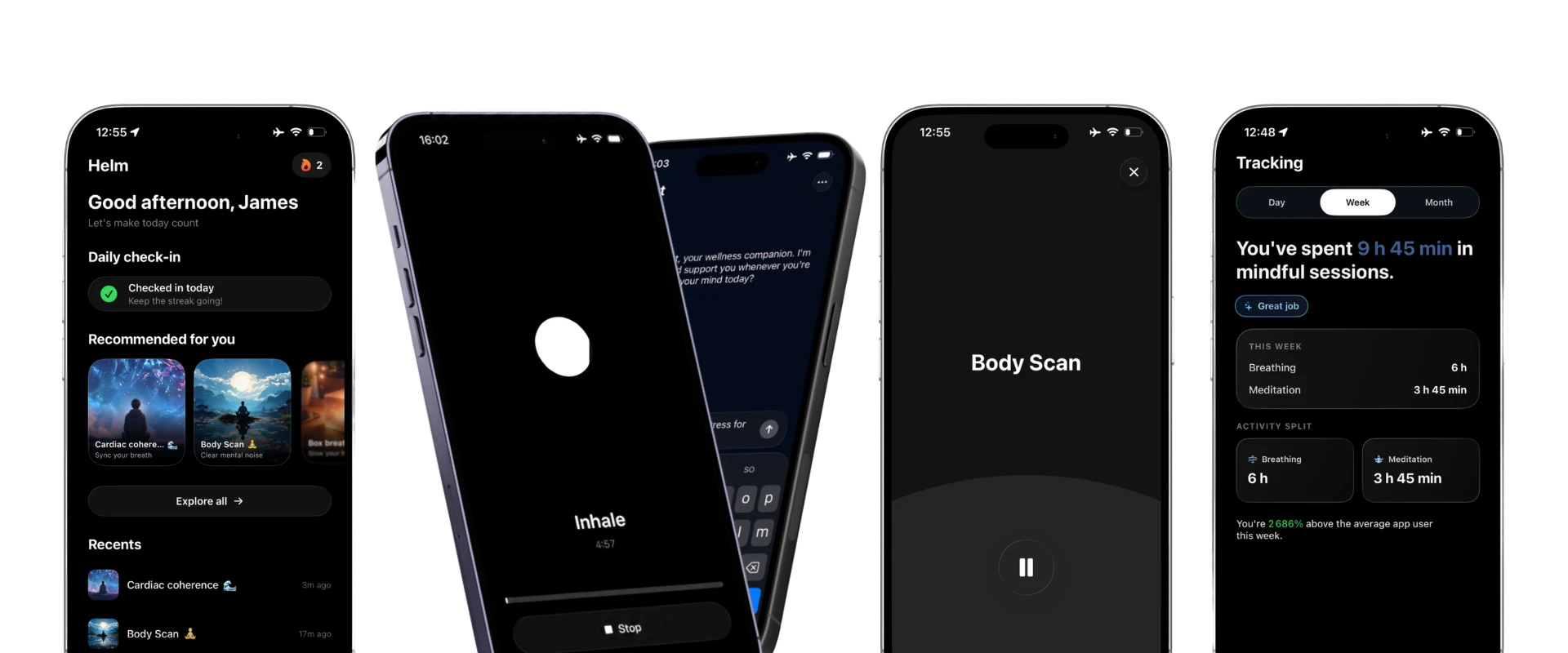
Power breathing works best when you treat it like a skill: simple, repeatable, and grounded in how your body actually responds. Focus on a gentle inhale, a longer exhale, and a pace you can maintain without strain. If you feel worse, reduce depth first, then slow down, and return to normal breathing if needed. In a week of consistent practice, many people notice fewer stress spikes, quicker recovery after conflict, and improved sleep onset because the body learns the pattern faster. If you want a guided version you can run in minutes, try Helm, an iOS mental wellness app designed to manage stress and improve focus through guided breathing resets.
Once or twice daily is enough for most people, plus “as needed” during stress. Consistency matters more than duration, even 2 to 5 minutes builds faster recovery.
It can, especially when it emphasizes a longer exhale and gentle depth. If breath focus increases panic, keep it shorter, breathe normally, and use grounding through touch or sight first.
Nasal breathing is usually calmer because it naturally slows airflow. If your nose is congested, breathe softly through the mouth and reduce breath depth to avoid over-breathing.
Skip strict counting and use a feel-based rule: inhale quiet and easy, exhale longer and smoother. You can also match the exhale to a slow whisper in your mind like “soften.”
Yes, gentle slow breathing is often sleep-friendly because it reduces arousal. Avoid strong breath holds or very deep breathing at night, which can feel stimulating for some people.
Join thousands using Helm to manage stress, improve focus, and build lasting healthy habits.